
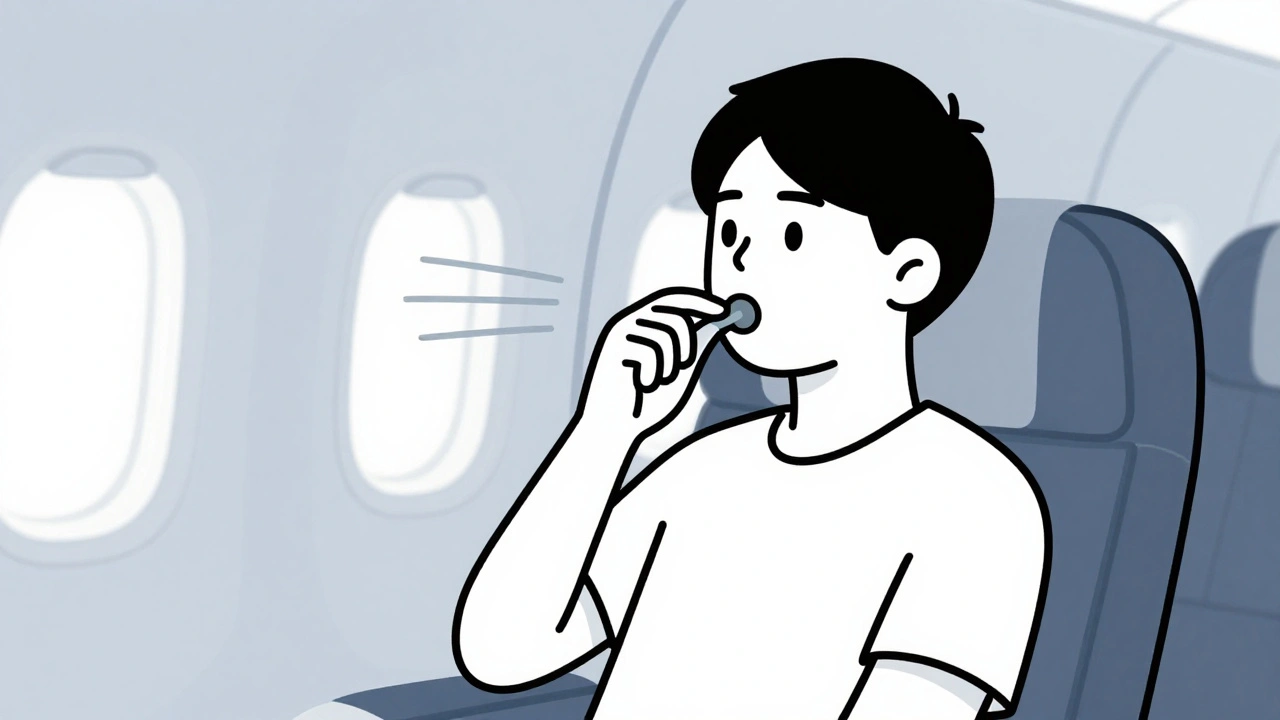
Ever landed with your ears ringing, muffled, or painfully blocked? You’re not alone. About 1 in 5 adults and nearly 1 in 4 kids experience airplane ear - that sharp, pressure-filled ache during takeoff or landing. It’s not just annoying. Left unchecked, it can lead to temporary hearing loss, dizziness, or worse. But here’s the good news: most cases are preventable. You don’t need to avoid flying. You just need to know how to equalize pressure the right way.
Why Your Ears Hurt on Planes
Your middle ear is a small air pocket tucked behind your eardrum. It’s connected to the back of your throat by a tiny tube called the Eustachian tube. Normally, this tube opens when you swallow or yawn, letting air flow in or out to balance pressure on both sides of your eardrum.When the plane climbs, cabin pressure drops. Your middle ear pressure stays higher, so your eardrum bulges outward. When the plane descends, cabin pressure rises. Now your middle ear pressure is lower, and your eardrum gets sucked inward. If your Eustachian tube can’t open fast enough - especially if you’re congested from a cold, allergies, or sinus issues - pressure builds up. That’s when you feel the pain, fullness, or popping.
Children are more vulnerable. Their Eustachian tubes are shorter, narrower, and more horizontal - making them harder to open. That’s why babies and toddlers often cry during descent. It’s not just fussiness. It’s physical discomfort.
How to Equalize Pressure - The Right Way
You have options. Not all of them are safe. Some can actually make things worse.- Swallow or yawn - This is the safest, simplest method. It works for about 65% of people. Sip water, chew gum, or suck on hard candy during descent. The act of swallowing naturally opens the Eustachian tube.
- The Toynbee maneuver - Pinch your nose shut and swallow. This combines swallowing with gentle pressure to help open the tube. It’s safer than blowing, and works for about 68% of users. Good for kids who can’t blow their nose.
- The jaw wiggle - Move your jaw side to side while swallowing. Studies show this boosts success by 22%, especially for children. It’s a subtle motion - no need to overdo it. Just wiggle gently as you swallow.
- The Valsalva maneuver - Pinch your nose and blow gently. This is the most common method, but also the riskiest. If you blow too hard, you can rupture your eardrum or damage your inner ear. Only use this if other methods fail, and blow as if you’re trying to fog up a mirror - not pop a balloon.
- The Lowry technique - Combine Valsalva and Toynbee: pinch your nose, blow gently, and swallow at the same time. It’s the most effective method - working for 89% of users - but takes practice. Don’t try it for the first time on a flight.
Don’t wait until you feel pain. Start equalizing at 8,000 feet during descent - that’s when pressure changes begin to matter. Keep doing it every 300 to 500 feet. Don’t wait until you’re at 2,000 feet and your ears are screaming.
Earplugs That Actually Work
Not all earplugs are created equal. Regular foam plugs just block sound. But filtered earplugs like EarPlanes are designed for flying. They contain a ceramic filter that slows down pressure changes by 37%. That gives your Eustachian tube more time - about 28 seconds instead of 15 - to adjust naturally.They’re not magic. In controlled studies, they help 76% of people. But if you have chronic Eustachian tube dysfunction, their effectiveness drops to 42%. Still, they’re a great first-line tool, especially if you’re flying often. A pair costs under $5 and lasts for 10+ flights.
Decongestants: Use With Caution
If you have a cold, sinus infection, or seasonal allergies, your Eustachian tube is probably swollen shut. That’s when decongestants can help.Nasal sprays like oxymetazoline (Afrin) shrink swollen tissues in 10 minutes. They’re effective for 85% of users. But don’t use them for more than 3 days - they can cause rebound congestion.
Oral decongestants like pseudoephedrine (Sudafed) work longer - 8 to 12 hours. But they can raise blood pressure and heart rate. If you’re over 40 or have heart issues, talk to your doctor first. The FDA warns that 12% of adults over 40 experience side effects.
And never give decongestants to children under 6. There are documented cases of fast heart rate and seizures in young kids. The risk isn’t high - about 0.07% - but it’s real.
Special Cases: Babies, Kids, and Chronic Problems
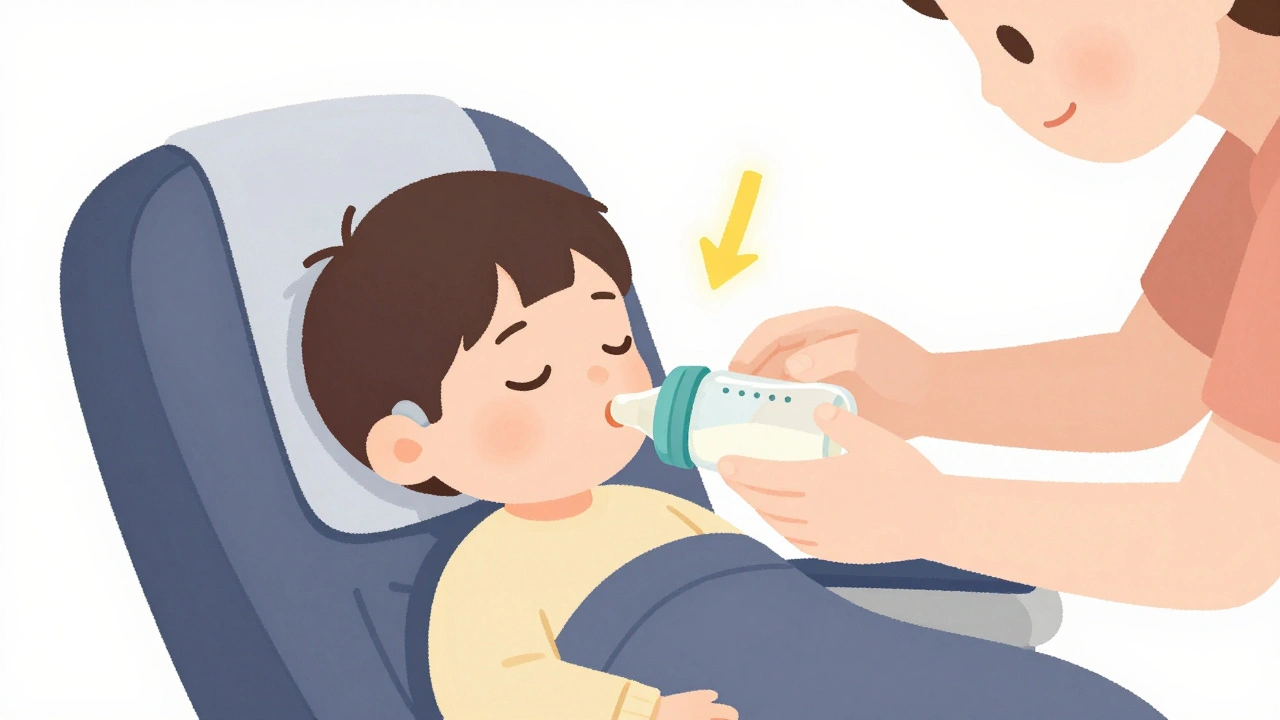
For babies: Feed them during descent. Bottle-feeding works better than sipping from a cup because sucking creates stronger swallowing pressure. Breastfeeding works too. If your baby is asleep, gently wake them up to feed. Sleeping during descent is the #1 reason kids get ear pain.For older kids: Use the jaw wiggle trick. It’s simple, safe, and surprisingly effective. Let them chew gum or suck on a lollipop. Make it a game - “wiggle your jaw like a dinosaur!”
If you have chronic ear pressure issues - like constant fullness, popping, or hearing loss even when you’re not flying - you may have Eustachian tube dysfunction. It’s more common than you think. New treatments are emerging:
- Otovent - A nasal balloon device you inflate through your nose. It’s FDA-approved and works in 88% of users.
- Balloon dilation - A minor procedure where a tiny balloon is inserted into the Eustachian tube and inflated to widen it. Success rate: 76%. Cost: $3,800-$5,200 out-of-pocket.
- Experimental stents - Tiny tubes placed in the Eustachian tube to keep it open. Early trials show 92% success.
What Airlines Are Doing to Help
You’re not alone in this. Airlines and manufacturers are making changes.Boeing 787 Dreamliners maintain cabin pressure at 6,000 feet - lower than the standard 8,000 feet. That reduces pressure differences by 25%. Delta Airlines now uses a gentler 3-degree descent angle instead of the usual 3.5 degrees, slowing pressure changes by 14%.
FAA requires all major U.S. airlines to train crew on how to help passengers with ear pressure. Flight attendants now routinely remind people to swallow, chew, or use earplugs during descent.
What Not to Do
Here are the biggest mistakes people make:- Waiting until it hurts - 68% of people only start equalizing when pain hits. By then, it’s harder to fix.
- Blowing too hard - 41% of inner ear injuries from flying come from overdoing the Valsalva maneuver.
- Sleeping through descent - 73% of pediatric ear pain cases happen because the child is asleep and not swallowing.
- Using nasal sprays too long - More than 3 days of Afrin can make congestion worse.
Pre-Flight Prep: A Simple Routine
You can reduce your risk by 57% just by doing this one week before flying:- Swallow 10 times every hour while awake - no need to drink, just move your jaw.
- Practice the jaw wiggle while swallowing - 5 times a day.
- If you have allergies, start using a nasal steroid spray (like fluticasone) 3 days before your flight. It reduces inflammation by 61%.
- Buy a pair of EarPlanes and test them at home. Get used to how they feel.
- Take a decongestant 30-60 minutes before descent - but only if you’re healthy and under 40.
The goal isn’t to avoid pressure changes. It’s to help your body keep up with them.
What’s Next? The Future of Flying Comfort
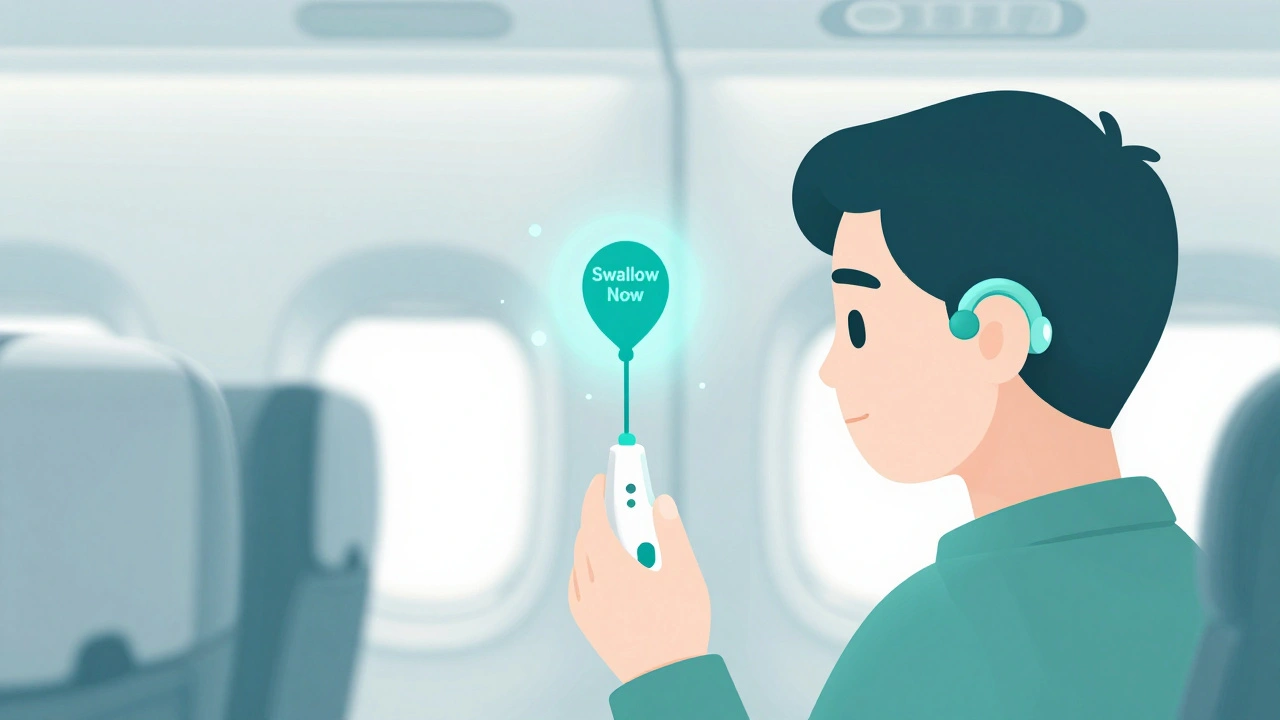
The FAA is considering a new rule by 2025: all new aircraft must keep cabin altitude below 6,500 feet during takeoff and landing. That’s a big deal. Lower cabin pressure means less stress on your ears.Companies like Bose are testing smart earplugs with built-in pressure sensors. They’ll give you real-time feedback: “Swallow now,” or “You’re behind on equalization.”
For people with chronic issues, these advances mean hope. No more dreading flights. No more waiting until the pain starts. You can fly - and stay comfortable - with the right tools and habits.
Can airplane ear cause permanent hearing loss?
In rare cases, yes - but only if pressure buildup is extreme and untreated. Permanent damage happens in about 0.02% of cases, usually from forcing the Valsalva maneuver too hard. Most people recover fully within days. If your hearing doesn’t return within 48 hours after landing, see an ENT doctor.
Is it safe to fly with a cold or sinus infection?
It’s risky. Congestion blocks your Eustachian tube, making equalization nearly impossible. If you must fly, use a nasal decongestant spray 30 minutes before descent, chew gum constantly, and avoid sleeping. If you’re very congested or have a fever, consider delaying your trip. The risk of ear injury is much higher.
Do earplugs help with tinnitus during flights?
Regular earplugs won’t help - they just reduce noise. But filtered earplugs like EarPlanes can reduce the pressure shock that triggers or worsens tinnitus. Many users report less ringing during and after flights. If tinnitus is chronic, talk to your doctor about nasal steroid sprays - they reduce inflammation that can aggravate inner ear symptoms.
Why do my ears pop on the ground but not on planes?
On the ground, pressure changes are slow - like driving up a mountain. On a plane, pressure drops or rises rapidly - sometimes 15 mmHg in under a minute. Your Eustachian tube can’t react fast enough unless you actively help it. That’s why you need to swallow, yawn, or use techniques. It’s not broken - it’s just overwhelmed.
Can children use EarPlanes?
Yes. EarPlanes are safe for children as young as 2. They come in a smaller size for kids. The filter works the same way - slowing pressure changes to give little ears time to adjust. Combine them with feeding or gum-chewing for best results. Avoid decongestants for kids under 6 - stick to swallowing, yawning, and filtered plugs.
How long does airplane ear last?
Most cases clear up within a few hours. If your ears feel muffled or full, try gentle swallowing and yawning for the next 2-3 hours. If pain or hearing loss lasts more than 48 hours, or you feel dizzy, see a doctor. Persistent symptoms could mean fluid buildup or a small eardrum tear - both need medical attention.
Final Tip: Practice Makes Perfect
Flying with ear problems isn’t about luck. It’s about preparation. The people who fly without pain aren’t lucky - they’re consistent. They chew gum. They swallow. They use earplugs. They don’t wait until it hurts.If you’ve struggled with this before, start today. Do the jaw wiggle while brushing your teeth. Swallow 10 times while watching TV. Get a pair of EarPlanes and try them on your next short flight. You’ll be surprised how much difference it makes.
You don’t have to avoid flying. You just have to fly smarter.
Webster Bull
December 11, 2025 AT 15:27Done.
Lauren Scrima
December 12, 2025 AT 04:04Rawlson King
December 13, 2025 AT 03:56Lara Tobin
December 14, 2025 AT 23:10Jamie Clark
December 16, 2025 AT 22:08Keasha Trawick
December 17, 2025 AT 09:27Bruno Janssen
December 18, 2025 AT 15:27Scott Butler
December 19, 2025 AT 02:12Emma Sbarge
December 19, 2025 AT 15:23Deborah Andrich
December 21, 2025 AT 08:39Tommy Watson
December 23, 2025 AT 03:13Donna Hammond
December 23, 2025 AT 17:12Richard Ayres
December 25, 2025 AT 11:59