
Every year, more than 82,000 Americans lose a foot or leg to diabetes-related amputation. Most of these cases don’t happen suddenly. They start with a small cut, a blister, or a sore that goes unnoticed-because the person with diabetes can’t feel it. Diabetic foot ulcers are preventable. But only if you know what to look for-and when to look.
Why Foot Care Isn’t Optional
If you have diabetes, your feet are at risk. High blood sugar damages nerves over time, a condition called peripheral neuropathy. That means you might not feel heat, pain, or pressure like you used to. You could step on a nail, rub a toe raw inside your shoe, or burn your foot on a heater-and not know until it’s too late. At the same time, diabetes narrows blood vessels, slowing healing. A tiny wound that would heal in days for someone without diabetes can turn into a deep, infected ulcer in weeks.The International Working Group on the Diabetic Foot (IWGDF) says about 15-25% of people with diabetes will develop a foot ulcer in their lifetime. And once you’ve had one, your chance of getting another jumps to 70%. The good news? Most of these ulcers start with something small. And most can be stopped before they grow-if you check your feet every single day.
The Daily Foot Inspection Checklist
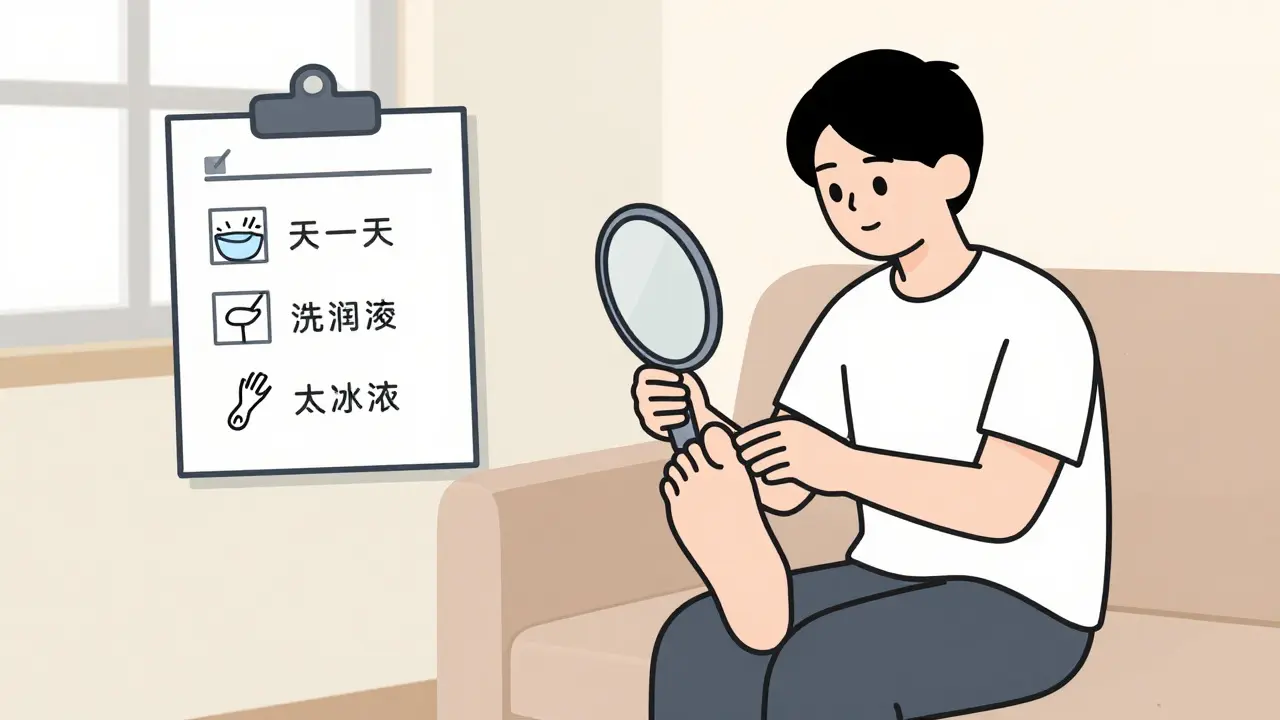
This isn’t a suggestion. It’s a non-negotiable part of managing diabetes. Here’s exactly what to do, step by step:- Wash your feet daily in lukewarm water-between 90°F and 95°F. Test the water with your elbow or a thermometer. Don’t use hot water. You might not feel it burning until it’s too late.
- Dry thoroughly, especially between your toes. Moisture there invites fungal infections, which can crack the skin and lead to open sores.
- Inspect every surface. Use a mirror or ask someone to help. Look at the tops, bottoms, sides, and between your toes. Don’t skip the soles. That’s where 92% of ulcers form, usually under the balls of your feet.
- Look for warning signs: blisters larger than a pea, cuts deeper than a scratch, redness bigger than a coin, swelling that makes your shoe feel tight, or skin that feels warmer than the other foot.
- Apply moisturizer to dry skin-except between your toes. Dry, cracked skin can split open. But too much moisture between toes invites fungus.
- Trim nails straight across. Don’t round the edges. Cut them so they’re 1-2 mm above the skin. If you can’t see well or have thick nails, get help from a podiatrist.
- Do this at the same time every day. Experts recommend between 10 a.m. and 2 p.m., when your body temperature is most stable. Inconsistent timing means you might miss early changes.
Studies show that 68% of foot ulcers start from minor injuries that were never noticed because inspections were skipped or rushed. Make this routine. Set a phone reminder. Tie it to brushing your teeth. Do it before you sit down for dinner. Whatever works-just don’t miss a day.
Footwear: Your First Line of Defense
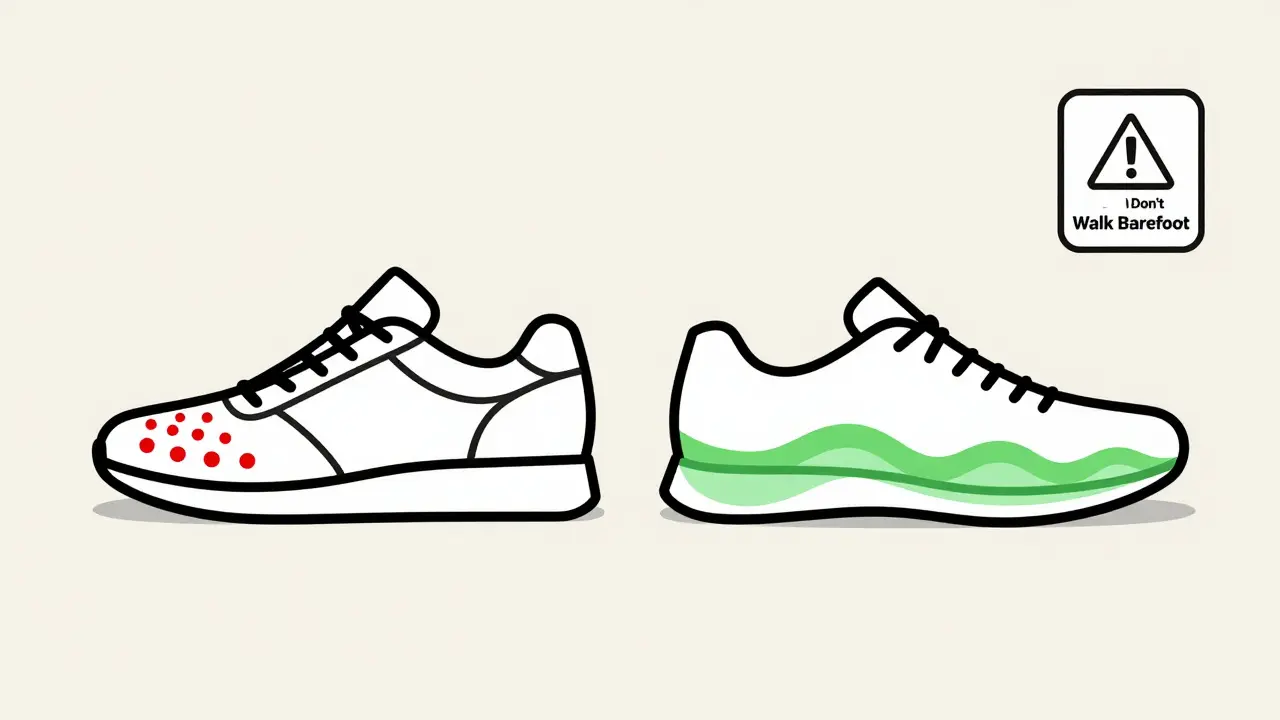
Shoes aren’t just for walking. They’re medical equipment if you have diabetes. Wearing the wrong shoes is the #1 cause of foot ulcers in people with nerve damage.The 2023 IWGDF guidelines say inappropriate footwear causes 87% of forefoot ulcers and 79% of midfoot ulcers. That’s not a typo. Most of these come from pressure points-where your shoe rubs, pinches, or squeezes your foot.
Here’s what to look for:
- There should be at least 0.5 inches (12.7 mm) of space between your longest toe and the end of the shoe.
- Your toes should be able to wiggle freely. If they’re squished, the shoe is too narrow.
- The heel counter (the stiff part around your heel) should feel firm, not floppy. It should hold your foot without digging in.
- Never walk barefoot-not even indoors. The CDC says walking barefoot for just 5 minutes a day increases your ulcer risk by more than 11 times.
- Avoid flip-flops, sandals with thin soles, or shoes with pointed toes. They offer no protection and increase pressure on the ball of your foot.
If you have moderate to high risk (neuropathy with deformity, or past ulcers), you may need therapeutic shoes. These aren’t fancy-they’re custom-designed to reduce pressure on high-risk areas. Insurance, including Medicare, often covers them if your doctor prescribes them.
Who’s at Highest Risk?
Not everyone with diabetes needs the same level of care. The IWGDF classifies risk into four levels:- Risk 0: No nerve damage, no foot deformities, no past ulcers. Check feet once a year.
- Risk 1: Nerve damage but no deformities. Check feet every 6 months.
- Risk 2: Nerve damage with foot deformities (like bunions, hammertoes, or collapsed arches). Check feet every 3 months.
- Risk 3: History of foot ulcer or amputation. Check feet monthly-or more often if your doctor says so.
If you’ve had a foot ulcer before, you’re in the highest-risk group. That doesn’t mean you’re doomed. It means you need to be extra careful. A single missed inspection can undo months of progress.
What to Avoid
Some things you’ve heard might be wrong-or even dangerous.- Don’t use heating pads or hot water bottles. You might not feel the burn until you’ve damaged skin.
- Don’t try to cut corns or calluses yourself. Even a small nick can become infected. See a podiatrist.
- Don’t use over-the-counter corn removers. These contain acids that can burn your skin.
- Don’t ignore redness or warmth. If one foot feels hotter than the other, or if redness spreads beyond the size of a quarter, call your doctor immediately. That’s a sign of infection.
- Don’t rely on antibiotics to prevent infection. The IDSA says giving antibiotics to uninfected ulcers doesn’t help healing-and increases antibiotic resistance.

When to Call Your Doctor
You don’t have to wait for a full-blown ulcer to get help. Call your provider if you notice:- A blister, cut, or sore that doesn’t start healing in 2 days
- Redness that spreads beyond 1 cm
- Swelling that makes your shoe feel tighter than usual
- Drainage, pus, or a foul smell from any area
- A change in foot shape or new pain
Early treatment makes all the difference. A small ulcer treated within a week has a 90% chance of healing without surgery. Wait two weeks? That drops to 50%.
Barriers to Care-and How to Overcome Them
Many people want to do the right thing. But life gets in the way.Only 42% of people with diabetes do full daily foot checks. Why? Vision problems make it hard to see small changes. Neuropathy makes it hard to remember routines. Money is a problem-therapeutic shoes cost hundreds of dollars. And many patients don’t have access to podiatrists.
Here’s what works:
- Use a mirror with a long handle. You can buy one for under $15 online.
- Ask a family member to help. Make it part of your evening routine together.
- Ask your doctor for a referral to a certified diabetes care and education specialist. They can teach you how to inspect your feet and help you get affordable footwear.
- Check your state’s Medicaid rules. As of January 2024, 47 states require annual foot exams for Medicaid patients. Some even cover therapeutic shoes.
There are new tools too-like smart socks that detect temperature changes or phone apps that analyze photos of your feet. But these aren’t necessary for everyone. The cheapest, most effective tool you have? Your eyes. And your commitment to using them every day.
What’s Next?
The CDC has set a goal: cut diabetes-related amputations by 25% by 2030. That’s possible. But it won’t happen by accident. It happens because someone checks their feet today. Because someone asks for help when they see a red spot. Because someone wears the right shoes-even when it’s 90 degrees outside.Diabetes doesn’t have to take your feet. But it will-if you stop looking.
How often should I check my feet if I have diabetes?
If you have no nerve damage or past foot problems, check your feet once a year during your diabetes visit. If you have nerve damage (neuropathy), check daily. If you’ve had a foot ulcer or amputation, check daily and see your doctor every 1-3 months. Daily inspection is the most effective way to catch problems early.
Can I use lotion between my toes?
No. Moisture between your toes creates a warm, damp environment where fungus thrives. This can lead to cracks in the skin, which become entry points for infection. Apply moisturizer only to the tops and bottoms of your feet, avoiding the spaces between your toes.
Do I need special shoes if I don’t have ulcers yet?
If you have nerve damage, foot deformities like bunions or hammertoes, or poor circulation, yes. Even without ulcers, these factors put you at high risk. Standard shoes can create pressure points that lead to ulcers. Therapeutic shoes are designed to reduce pressure and prevent injury. Medicare and many private insurers cover them with a doctor’s prescription.
Is it safe to walk barefoot at home?
No. Walking barefoot-even indoors-increases your risk of foot ulcers by more than 11 times. You might step on a sharp object, burn your foot on a radiator, or twist your ankle without realizing it. Always wear shoes or slippers with closed toes and good support inside your home.
Can I trim my own toenails?
You can, if you can see clearly and have good hand control. Cut them straight across, not rounded, and leave about 1-2 mm of nail beyond the tip of your toe. If you have thick nails, poor vision, or numbness in your hands, see a podiatrist. Cutting too short or too curved can cause ingrown toenails, which often lead to infection.
What should I do if I notice a small cut on my foot?
Wash it gently with soap and water. Apply an antibiotic ointment if you have it. Cover it with a clean bandage. Check it daily. If it doesn’t start healing within 2 days, or if redness, swelling, or drainage appears, call your doctor immediately. Don’t wait. Early treatment prevents ulcers from becoming serious.
Are diabetic socks worth it?
Diabetic socks are designed without seams, elastic bands, or tight tops that can restrict circulation. They’re made of moisture-wicking material to keep feet dry. While they’re not a substitute for proper shoes or daily inspections, they’re a helpful addition-especially if you have swelling or sensitive skin. Look for socks labeled ‘non-constricting’ and ‘seamless’.
Can exercise cause foot ulcers?
Unsupervised exercise can, especially if you have nerve damage. Walking long distances or doing high-impact workouts without proper shoes or gait analysis can create pressure points that lead to ulcers. Low-impact activities like swimming or cycling are safer. If you want to walk, wear therapeutic shoes and check your feet before and after. Talk to your doctor or a physical therapist about a safe exercise plan.
Katelyn Slack
January 7, 2026 AT 04:47Harshit Kansal
January 7, 2026 AT 05:08Brian Anaz
January 7, 2026 AT 15:36Venkataramanan Viswanathan
January 8, 2026 AT 05:50Vinayak Naik
January 9, 2026 AT 22:52Saylor Frye
January 11, 2026 AT 20:55Kiran Plaha
January 13, 2026 AT 07:07Matt Beck
January 15, 2026 AT 05:29Kelly Beck
January 15, 2026 AT 17:55Molly McLane
January 17, 2026 AT 15:54