If you are a parent or caregiver, you've likely seen this warning. It tells you that these medications can increase "suicidality"-the thoughts and behaviors associated with suicide-in children and adolescents. But here is the part the bold text doesn't tell you: the data is complicated, and some experts now believe the warning itself might be doing more harm than the drugs.
How the Warning Came to Be
The FDA (U.S. Food and Drug Administration) didn't pull this warning out of thin air. Back in 2004, they analyzed 24 short-term trials involving over 4,400 patients. These trials focused on people with Major Depressive Disorder (MDD) and Obsessive Compulsive Disorder (OCD). The results showed that about 4% of youth taking antidepressants experienced suicidal events, compared to 2% in the placebo group. While that 2% difference sounds small, the FDA decided it was significant enough to warrant the strongest warning possible in 2005. By 2007, they expanded this to include young adults up to age 24.
The warning covers almost all prescription antidepressants, including the popular SSRIs (Selective Serotonin Reuptake Inhibitors) like Prozac and Zoloft. The goal was simple: make sure doctors monitor their young patients much more closely during the early stages of treatment.
| Year | Action | Target Population | Key Requirement |
|---|---|---|---|
| 2004 | Health Advisory | Children & Adolescents | Physician awareness of suicidality |
| 2005 | Black Box Warning | Children & Adolescents | Bold framed warning on packaging |
| 2007 | Warning Expansion | Youth up to age 24 | MedGuides for all prescriptions |
The Unintended Consequences of "Safety First"
Here is where the story takes a turn. While the FDA wanted to save lives, real-world data suggests the warning may have backfired. When a doctor tells a parent, "This drug could cause your child to think about suicide," many parents understandably panic and refuse the medication. This is called treatment avoidance.
Research published in Health Affairs in 2023 revealed a staggering trend: after the 2005 warning, antidepressant prescriptions for teens dropped by about 31%. This happened even though more teens were being diagnosed with depression. What's even more alarming is that while prescriptions went down, suicide rates among 10- to 19-year-olds actually rose from 2.0 to 3.5 per 100,000 between 2003 and 2007. This suggests that by scaring people away from a helpful tool, the warning might have left vulnerable kids without the treatment they needed to survive.
It's not just a theory. Dr. Stephen Soumerai and other researchers have documented a significant increase in psychotropic drug poisonings-often used as a proxy for suicide attempts-following the warnings. Specifically, there was a 21.7% increase in these events among adolescents by the second year after the original warning.
What This Means for Parents and Patients
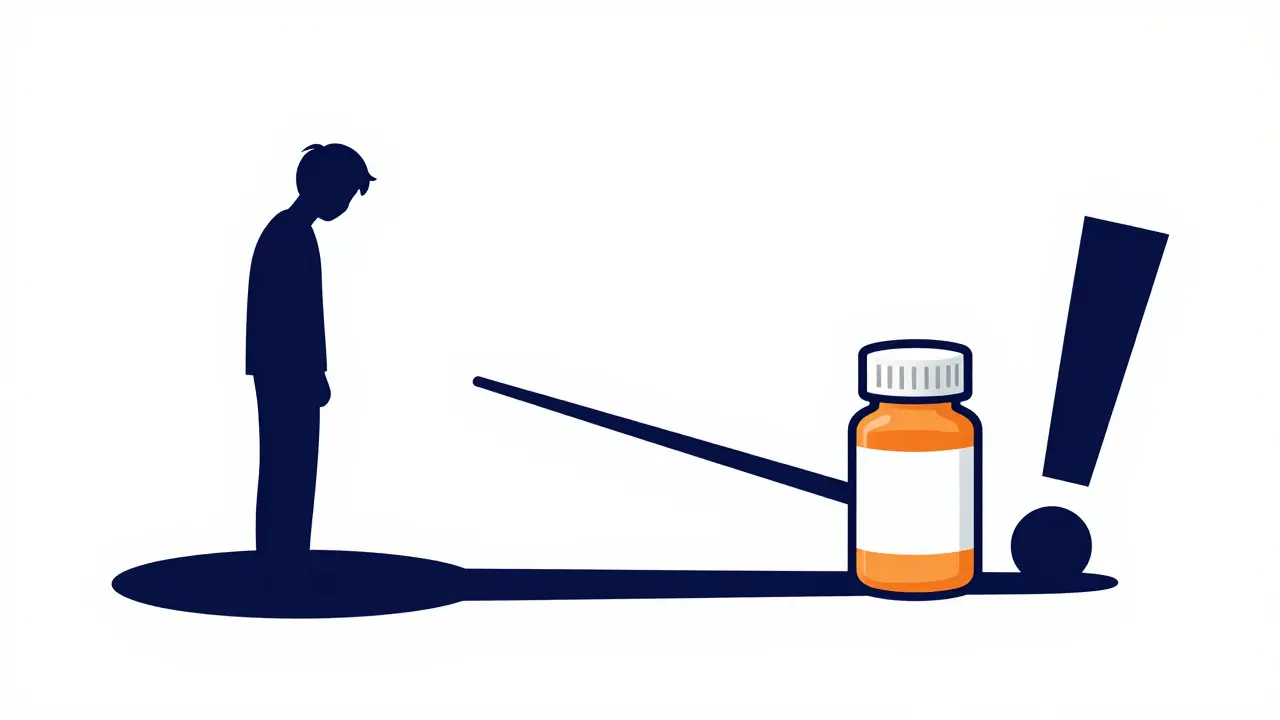
If you're staring at a prescription bottle with a black box, you're likely feeling caught in a tug-of-war. On one side, there is the fear that the medication could worsen suicidal thoughts. On the other, there is the reality of a child suffering from severe depression, which itself is a massive risk factor for suicide.
The key is to remember that the clinical trials used for the warning did not report any completed suicides-only an increase in "suicidal thinking." This is a crucial distinction. Medication isn't a magic switch, but for many, it provides the stability needed to engage in therapy and make long-term recovery possible. In fact, a survey by the National Alliance on Mental Illness (NAMI) found that 67% of users who proceeded with treatment despite the warning reported positive outcomes.
The best approach is to treat the warning as a prompt for vigilance, not as a reason for avoidance. Instead of asking "Is this drug dangerous?", ask your doctor: "What specific changes in behavior should I look for in the first few weeks?" and "How often will we check in to adjust the dose?"
The Doctor's Dilemma: Monitoring vs. Reality
For psychiatrists, the black box warning has turned a simple prescription into a logistical hurdle. To follow the FDA's intended safety protocol, doctors are supposed to monitor patients weekly for the first month, then bi-weekly for the second month. In a perfect world, this works. In the real world, it's nearly impossible.
A 2020 study in JAMA Network Open found that only 37.2% of youth patients actually received this recommended level of monitoring. In rural areas, that number plummeted to 22.4%. Doctors are spending significantly more time-nearly 23 minutes per patient-just explaining the warning to worried parents, which takes away from actual therapeutic time.
Because the monitoring is so hard to maintain, some doctors have simply stopped prescribing antidepressants to youth altogether, further contributing to the gap in care. This has led organizations like the American College of Neuropsychopharmacology to call for a reassessment of the warning, arguing that the real-world harm of untreated depression outweighs the small statistical risk of medication-induced suicidality.

Looking Ahead: Is a Change Coming?
The global medical community is not in agreement on this. For example, the European Medicines Agency never implemented a warning equivalent to the U.S. version. Interestingly, European countries didn't see the same spike in suicide rates that the U.S. did after 2005, which supports the idea that the U.S. warning created a unique set of problems.
There is a growing movement to move away from a "blanket warning" toward "targeted guidance." Instead of a scary box that applies to everyone, researchers at the National Institute of Mental Health (NIMH) are working on risk stratification tools. These tools would help doctors identify which specific children are at a higher risk of adverse reactions and which can safely start treatment without extreme alarm.
As of late 2023, the FDA has held advisory meetings to review the latest evidence, and pharmaceutical companies like Eli Lilly and Pfizer have asked for the language to be modified. While the black box remains for now, the conversation is shifting from "How do we warn people?" to "How do we treat people safely without scaring them away from help?"
Does the black box warning mean antidepressants cause suicide?
No. The original FDA trials that led to the warning showed an increase in suicidal thoughts and behaviors (suicidality), but no actual completed suicides occurred during those trials. The warning is meant to encourage closer monitoring, not to state that the medication will cause a suicide attempt.
Which medications are affected by this warning?
The warning applies to all prescription antidepressants, including SSRIs (like Fluoxetine/Prozac and Sertraline/Zoloft) and other antidepressant classes used to treat depression or anxiety in youth.
What should I look for if my child starts an antidepressant?
You should watch for unusual changes in behavior, increased agitation, or any new mentions of self-harm or suicidal thoughts. These are most likely to appear in the first few weeks of treatment or when a dose is changed.
Why do some doctors say the warning is harmful?
Many experts argue that the warning scares parents into refusing necessary medication. This leads to untreated depression, which is a major risk factor for suicide. Research suggests that the drop in prescriptions following the warning correlates with an increase in actual youth suicide rates.
Are there alternatives to antidepressants for youth?
Yes. Depending on the severity of the condition, options include Cognitive Behavioral Therapy (CBT), Interpersonal Therapy (IPT), and lifestyle interventions. Many doctors recommend a combination of therapy and medication for the best results.
Next Steps for Families
If you are navigating this decision, don't let the black box be the only thing guiding you. Start by documenting your child's symptoms and how they affect daily life. When you meet with the provider, ask for a benefit-risk analysis: what is the risk of the medication versus the risk of leaving the depression untreated?
For those already on medication, set up a "monitoring calendar." Instead of relying on the doctor's office for every check-in, keep a daily log of mood and sleep patterns. If you notice a sudden spike in irritability or darkness in their thoughts, contact your provider immediately. Remember, the goal is to use the warning as a tool for safety, not a barrier to recovery.