
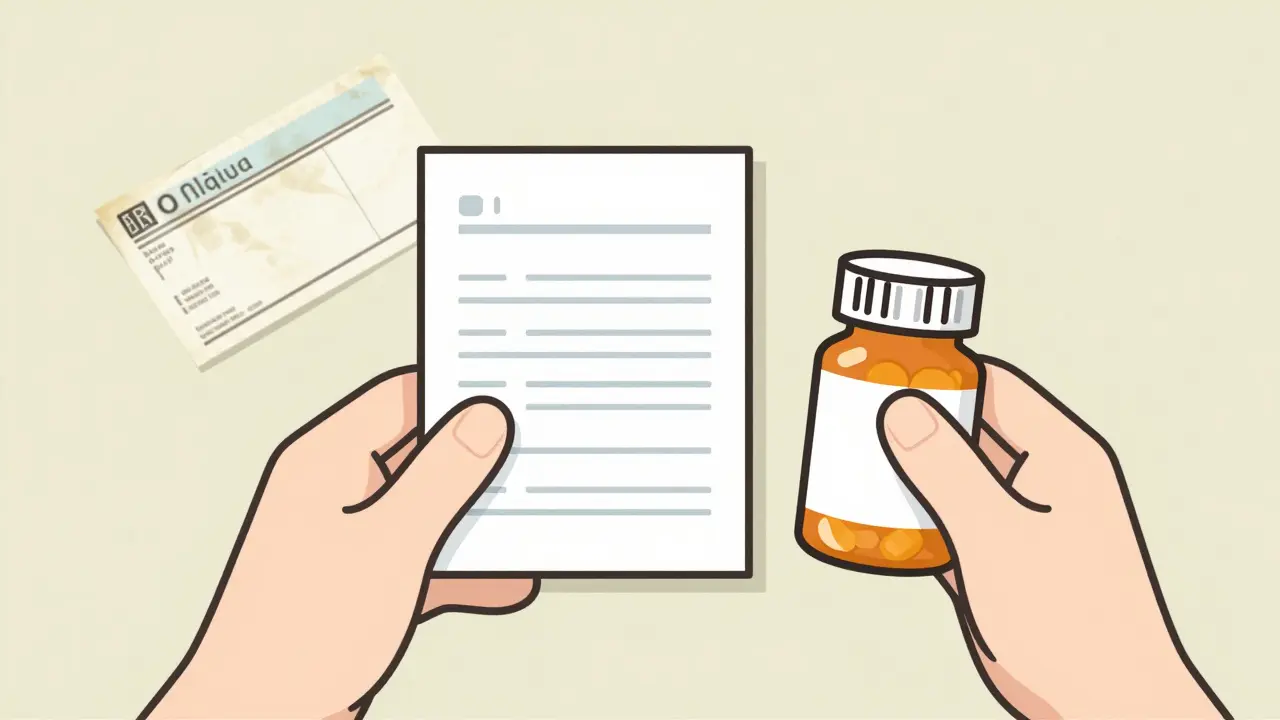
Medication Guide Comparison Tool
Current Medication Guides
⚠️ Only available for specific drugs (Approx. 150 out of thousands)
📚 Multi-page booklets (Varies by drug)
🔍 Medical jargon used (e.g., "administer orally with a light meal")
📊 Includes effectiveness data (e.g., "reduces blood pressure by 15%")
📋 Cluttered with legal/pharmacy info (Billing codes, disclaimers, etc.)
Proposed PMI
✅ Required for all prescription drugs (Every outpatient prescription)
📝 One standardized page (Same format for all drugs)
🗣️ Plain language only (e.g., "Take with food")
💡 Focus on safety and usage (Excludes effectiveness data)
✨ Clean, patient-focused design (12-point font, no fluff)
Key Difference
The PMI prioritizes clarity over completeness. It focuses exclusively on what patients need to know to take medication safely, while omitting effectiveness data that is typically discussed with healthcare providers.
How This Affects You
👨⚕️ If you take any prescription medicine: You'll receive standardized safety information regardless of pharmacy or drug type.
📱 Digital options available: Receive PMI as PDF via email or pharmacy app.
♿ Accessibility built in: Designed for low health literacy (80M+ adults in US).
What to Ask Your Pharmacist
❓ "Can I get this in digital format?"
❓ "Does this medication require any special precautions?"
❓ "What should I do if I miss a dose?"
What the FDA Is Proposing for Your Prescription Labels
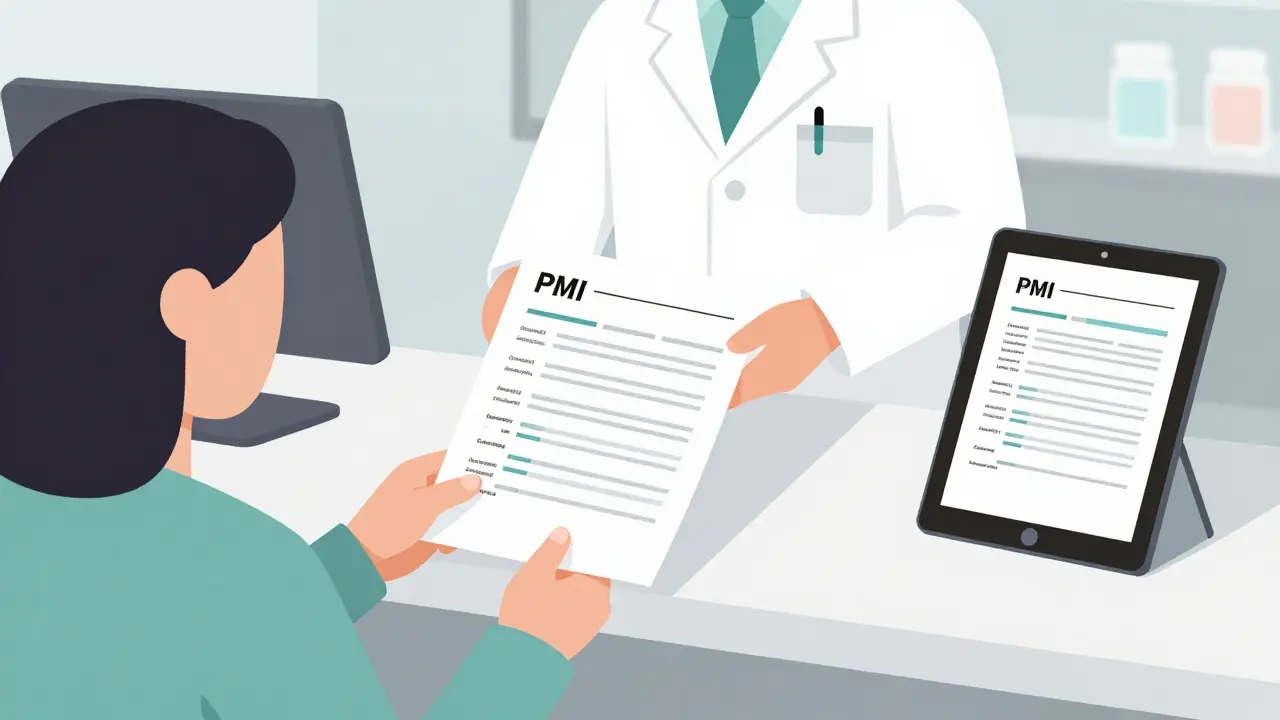
Right now, when you pick up a prescription, you might get a small paper insert - or maybe nothing at all. Some drugs come with a Medication Guide, but only about 150 out of thousands of prescription drugs require one. That means if you’re taking insulin, blood pressure medicine, or antibiotics, you could be getting different information - or none - depending on your pharmacy. The FDA wants to change that. In May 2023, they proposed a new rule called Patient Medication Information (PMI), which would require every outpatient prescription drug to come with a clear, standardized one-page guide written in plain language.
Why This Change Matters
Medication errors are a silent crisis in the U.S. Every year, about 1.3 million people are injured and 7,000 die because of mistakes with prescriptions. Many of these errors happen because patients don’t understand how to take their medicine. Is it with food? Can you drink alcohol? What if you miss a dose? Current labels are often cluttered with legal disclaimers, pharmacy codes, and billing info - not the stuff you actually need to know.
The new PMI format cuts through the noise. It starts with a bold statement: “Use exactly as prescribed.” Then it gives you just the essentials: how to take it, what to avoid, how to store it, and what side effects to watch for. No fluff. No marketing. Just facts, in 12-point font, using words most adults can understand.
How It’s Different from Today’s Medication Guides
Today’s Medication Guides are scattered. They’re only required for drugs with serious risks - like blood thinners, certain antidepressants, or opioids. Even then, each one looks different. One might say “common side effects include nausea,” while another lists exact percentages. The PMI changes that. It’s one template for everything.
Here’s what’s new:
- One page only. No multi-page booklets. Everything fits on a single sheet.
- Standardized sections. Same order, same headings, no matter the drug.
- Plain language. No medical jargon. “Take with food” instead of “administer orally with a light meal.”
- Electronic option. You can get it as a PDF via email or a pharmacy app - if you want it.
- Approved by the FDA. Every PMI must be reviewed and cleared by the agency before it goes out.
What’s Missing - And Why That’s a Debate
There’s one big criticism. The PMI doesn’t tell you how well the drug works. It doesn’t say, “This medicine reduces blood pressure by 15% on average.” It doesn’t explain how it works in your body. It focuses only on safety and usage.
Researchers at the University of Pittsburgh tested a version called “Decision Critical PMI,” which added numbers: “48% of patients experience fever,” not just “fever is a common side effect.” In focus groups, patients said that made a huge difference. One woman said, “If I know almost half of people get a fever, I won’t panic when it happens.”
The FDA says they’re prioritizing clarity over completeness. They believe doctors already explain benefits and risks during visits. But critics argue: what if you don’t remember what your doctor said? What if you’re anxious, or tired, or didn’t get enough time with your provider? The PMI might be the only chance you get to understand your medicine.
Who Has to Make This Happen
Pharmaceutical companies are on the hook to create these PMIs. For big drugmakers like Pfizer or Merck, that means writing thousands of these one-page guides. For smaller companies, it’s a big lift. The FDA is giving them templates and style guides to help. They’ve also set up a review team to handle an expected 10,000+ submissions each year.
Pharmacies will need to adjust their workflows. Right now, they print labels with barcodes and insurance info. Soon, they’ll need to add the PMI - either printed or digital. The FDA estimates this will add 30 to 60 seconds per prescription during the first year. That’s not much, but for a busy pharmacy, it adds up.
Pharmacists surveyed by the American Pharmacists Association said 78% think it’s worth it - even if it slows things down. Safety matters more than speed.
When Will This Happen?
The proposal is still open for public comment, but the FDA is expected to finalize the rule in early 2024. Implementation will be phased:
- Large manufacturers: Must comply within 24 months of the final rule.
- Small manufacturers: Have 36 months.
- Pharmacies: Must start distributing PMIs within 30 days of the drug’s release with the new label.
By 2025, if this rule goes through, you’ll start seeing these new labels in your pill bottles. It won’t happen overnight, but it will become the new normal.
What This Means for You
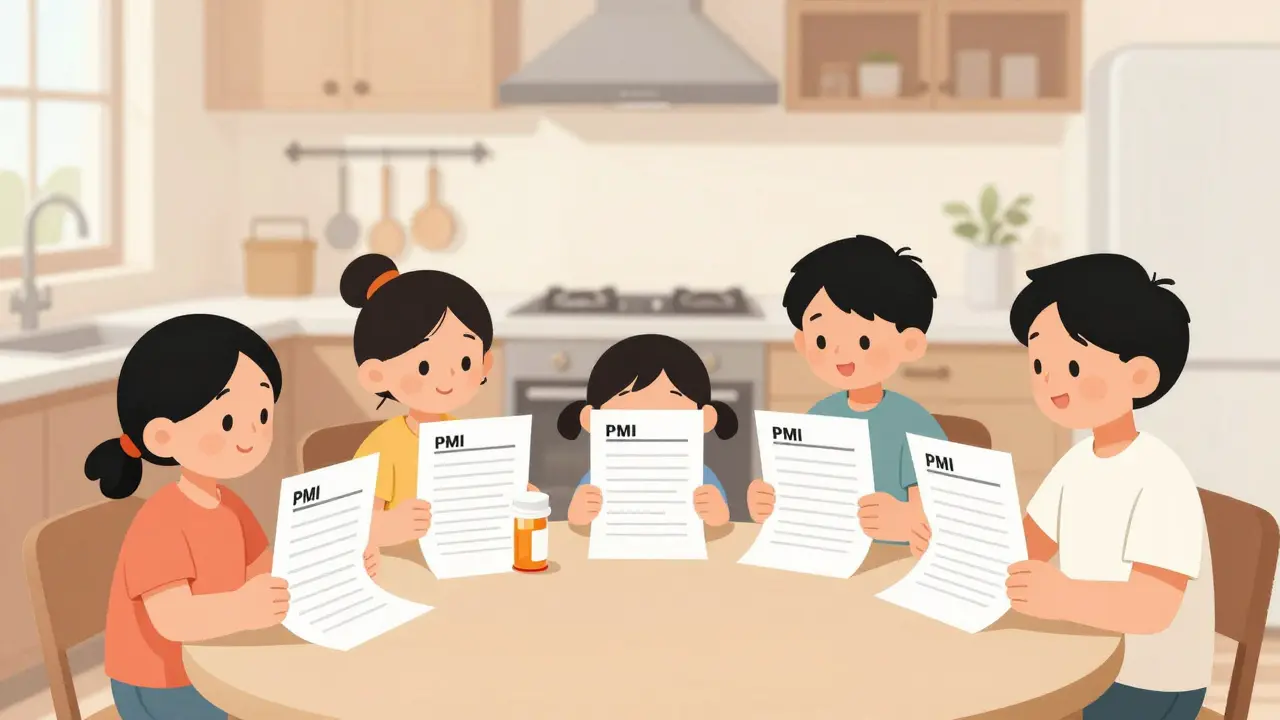
If you take any prescription medicine - even just one - this affects you. The PMI isn’t just for seniors or people with chronic illness. It’s for anyone who’s ever taken an antibiotic, a painkiller, or a birth control pill. You’ll get the same clear, consistent info no matter where you fill your prescription.
You’ll also have more control. You can ask for the PMI in digital form. If you’re not tech-savvy, you’ll still get a printed copy. The FDA made sure accessibility is built in - including for people with low health literacy. That’s about 80 million adults in the U.S.
And if you’re worried about side effects? You’ll know what’s normal and what’s not. You’ll know what to do if you miss a dose. You’ll know how to store your medicine safely. And you’ll know how to dispose of it properly - something most people don’t ask about, but the FDA now requires.
What Comes Next
The FDA has said they’re watching how patients respond. If studies show people still struggle to understand risks and benefits, they might update the PMI again. The University of Pittsburgh’s research could lead to a second phase - one that includes effectiveness data. That’s something the agency is already considering.
Other countries are watching too. The European Medicines Agency is exploring similar rules for 2025. This isn’t just an American change - it’s a global shift toward putting patients first.
Bottom Line
The FDA’s proposed PMI isn’t flashy. It’s not going to make headlines every day. But it could save lives. By making medication instructions clear, simple, and universal, it removes guesswork. It reduces errors. It empowers patients. And it holds drugmakers accountable to the people who actually take their pills.
If you’ve ever been confused by a prescription label - or worried you didn’t understand your doctor - this change is for you. It’s not perfect. But it’s a step in the right direction. And in healthcare, sometimes the smallest changes make the biggest difference.
Demetria Morris
February 3, 2026 AT 01:32This is long overdue. I’ve had prescriptions where the instructions were written in tiny font, buried under insurance jargon and barcodes. I had to call my pharmacist three times just to figure out if I was supposed to take my blood pressure med with food or not. No one should have to play detective just to stay alive.
Geri Rogers
February 3, 2026 AT 06:40YES!! 🙌 Finally someone’s listening to patients! I’m a nurse and I’ve seen so many seniors panic because they didn’t know if a side effect was normal. This PMI? It’s not just helpful-it’s life-saving. Pharmacies better train their staff ASAP. No more ‘just read the label’ excuses. 💊❤️
Katherine Urbahn
February 4, 2026 AT 09:46While the intent is laudable, the implementation is fraught with logistical, linguistic, and regulatory inconsistencies. The FDA’s assertion that ‘plain language’ is universally comprehensible ignores the vast spectrum of health literacy levels, cognitive impairments, and non-native English speakers. Moreover, omitting efficacy data is not ‘clarity’-it is intellectual cowardice.
How can a patient make an informed decision without knowing that, statistically, 48% experience fever? The omission is not neutral-it is actively harmful. This is not reform; it’s performative minimalism.
Alex LaVey
February 5, 2026 AT 22:42As someone who grew up in a household where meds were just… taken, I didn’t know you could ask questions. This change? It’s not just about labels-it’s about dignity. People deserve to understand what they’re putting in their bodies. And if a pharmacy takes 30 extra seconds to hand you that info? Worth every second.
Prajwal Manjunath Shanthappa
February 6, 2026 AT 08:37How quaint. In Europe, we’ve had standardized patient leaflets since 2001. And they include pharmacokinetics, comparative efficacy data, and contraindications in tables. This ‘one-page’ approach is American mediocrity at its finest-reducing complex pharmacology to bullet points for people who can’t read beyond a cereal box.
Wendy Lamb
February 6, 2026 AT 18:20Finally. My grandma didn’t know her insulin needed refrigeration until she found the bottle warm. This should’ve been standard years ago.
Antwonette Robinson
February 8, 2026 AT 01:25Oh great. Now we get a pamphlet that says ‘take with food’ instead of ‘administer orally with a light meal.’ Who’s gonna win the Nobel Prize for this breakthrough? The FDA’s PR team?
Ed Mackey
February 9, 2026 AT 21:14im glad this is happening but like… what if you dont have a printer? like my aunt cant print pdfs and her phone is from 2017. hope they dont just make it digital and forget the paper ones. also typos are gonna be wild.
Shelby Price
February 10, 2026 AT 07:50So… if I get a new prescription, I’ll just get a one-page thing with the basics? No more 12-page booklets that look like a legal contract? Huh. I kinda like it. 😐
Jesse Naidoo
February 11, 2026 AT 00:58Wait, so now I have to wait 60 extra seconds at the pharmacy? That’s a whole minute of my life I’ll never get back. I’ve got a meeting in 10 minutes and now I’m supposed to read a pamphlet? This is just more bureaucracy for people who don’t care.
Lorena Druetta
February 11, 2026 AT 07:18To every individual who has ever felt overwhelmed, confused, or afraid by their medication instructions-this is a gift. The FDA has chosen compassion over convenience. This change honors the quiet dignity of those who simply want to heal. Thank you.
Zachary French
February 11, 2026 AT 16:04Let’s be real-this is the most exciting thing to happen to healthcare since the invention of the pill. Finally, someone’s giving us info that doesn’t sound like it was written by a robot who hates humans. I’m gonna print this out and frame it. Or maybe just yell it from my rooftop. Either way… BRING ON THE PMI. 🎉