
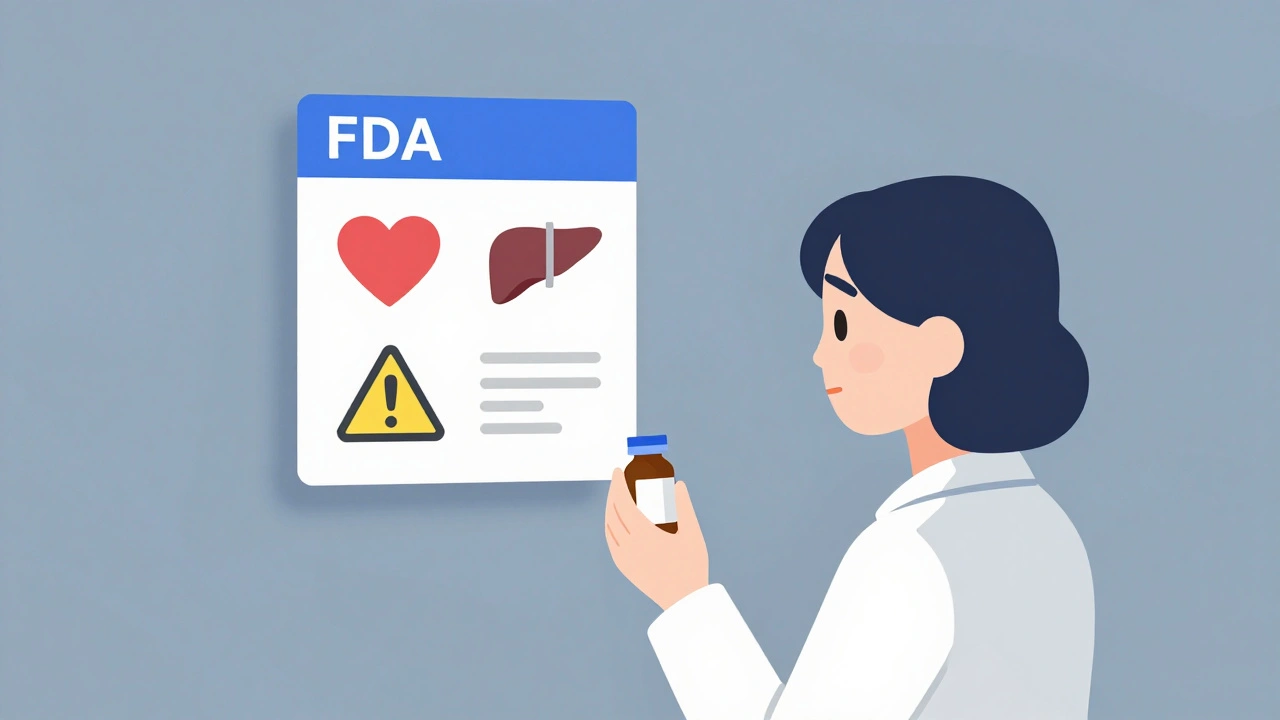
Every year, the FDA issues dozens of safety alerts about medications you or someone you care for might be taking. These aren’t ads. They’re not warnings from your pharmacist or a social media post. These are official notices from the U.S. Food and Drug Administration - and they can mean the difference between staying safe and facing serious harm.
But here’s the problem: most people don’t know how to read them. They see a headline like "FDA warns of heart risks with X medication" and either panic or ignore it entirely. That’s not the right move. You don’t need to be a doctor to understand what these alerts mean. You just need to know where to look and what to look for.
What Are FDA Safety Communications?
FDA Drug Safety Communications are official updates issued after a drug has been approved and is already on the market. Think of them as the FDA’s way of saying, "We’ve seen something new - here’s what it means."
These aren’t just random notices. They’re based on real data: thousands of patient reports, new clinical trials, or studies that show patterns the FDA didn’t catch during initial approval. Since 2007, the FDA has had stronger legal power to monitor drugs after they’re sold. That’s why you’re seeing more of these alerts - about 50 to 70 major ones every year.
They cover things like:
- New side effects that weren’t obvious before
- Changes to how a drug should be dosed
- Warnings about mixing medications
- Restrictions on who should take the drug
- Recalls or labeling updates
Not every alert is urgent. Some are informational. Others require immediate action. The key is learning how to tell the difference.
How to Spot the Most Important Parts
Every FDA Safety Communication follows a standard format. You don’t need to read the whole thing - just focus on these five sections.
1. "What Safety Concern Is FDA Announcing?"
This is your headline. It’s written plainly and tells you exactly what the issue is. For example: "FDA warns of increased risk of severe liver injury with Copiktra."
If you see words like "STOP using," "Do not take," or "immediate risk," this is serious. If it says "consider," "monitor," or "may be associated with," it’s a warning, not an emergency.
2. "Boxed Warning" (Also Called a Black Box Warning)
This is the FDA’s strongest warning. It’s called a "boxed warning" because it’s printed in a thick black border in the drug’s prescribing information. If a communication mentions a change to this section, it means the risk is life-threatening or can cause permanent damage.
Examples include: increased risk of suicide, heart failure, or sudden death. If your medication gets a new boxed warning, talk to your doctor right away - don’t wait.
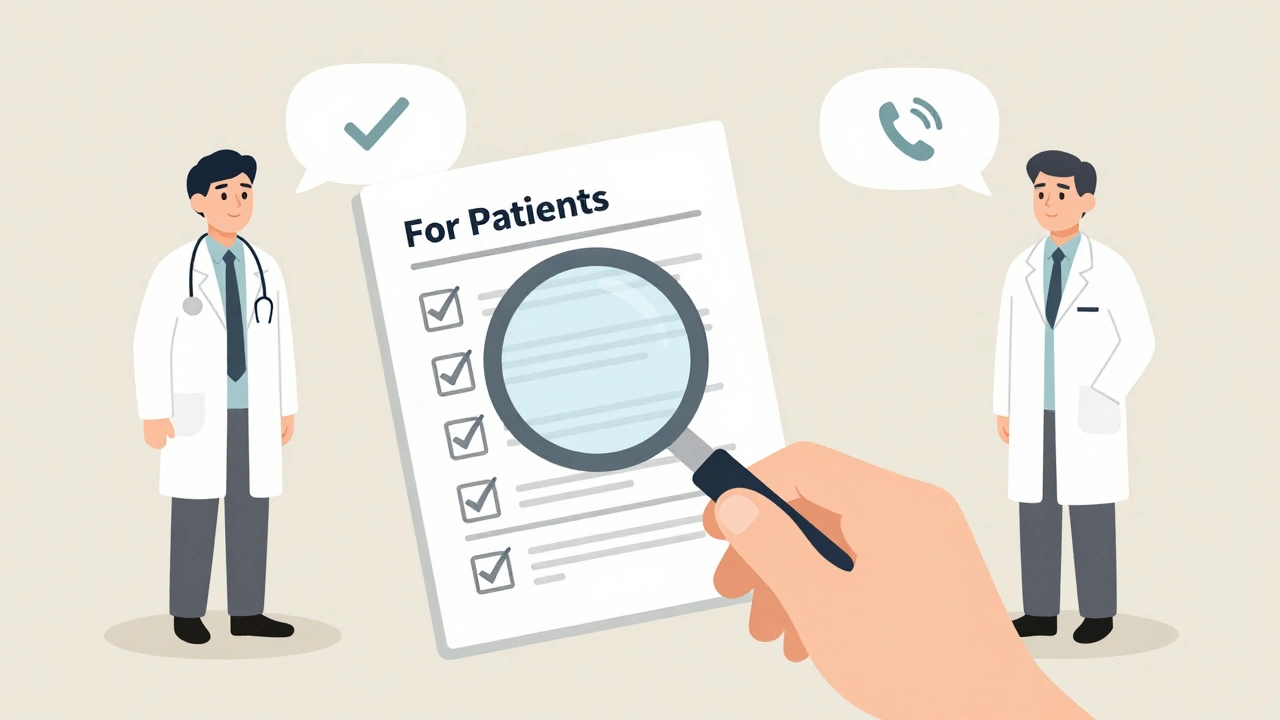
3. "For Patients" Section
This part is written for you - not for doctors. It’s short, uses simple language, and tells you what to do. Look for phrases like:
- "Read the Medication Guide every time you get a refill."
- "Talk to your doctor before stopping this medicine."
- "Call your doctor if you experience [symptom]."
The FDA requires these guides to be written at an 8th-grade reading level. If you’re confused, ask your pharmacist to explain it. They’re trained to help you understand.
4. "Highlights of Prescribing Information"
This section shows exactly what changed in the drug’s official prescribing info. It uses bold text for new language and strikethrough for removed text. For example:
Do not abruptly discontinue [Drug Name]
Do not rapidly reduce or abruptly discontinue [Drug Name]
This might seem small, but it matters. "Abruptly" means stopping cold turkey. "Rapidly reduce" means you can’t just cut your dose in half one day. The new wording tells doctors to taper you slowly - and that could prevent seizures or dangerous withdrawal.
5. "For Health Care Professionals"
This is for doctors and pharmacists, but it’s still useful. It tells them what actions to take - like ordering new lab tests, avoiding the drug in certain patients, or switching to another medication. If your doctor says they didn’t know about the alert, show them this section. Many don’t read the full report, but they’ll respond to a clear summary.
What to Do When You See an Alert
Don’t stop your medicine on your own. Don’t ignore it either. Here’s what to do next:
- Find the name of your medication. Check the alert to see if it applies to your exact drug. Sometimes it’s a whole class - like "all opioid painkillers" - and sometimes it’s just one brand.
- Look for the "What This Means For You" summary. This is the FDA’s version of "what should you do?"
- Check the Medication Guide. Every prescription comes with one. It’s usually a small paper insert. If you lost it, ask your pharmacy for a new copy. The FDA requires it to include serious risks.
- Call your doctor or pharmacist. Don’t wait for your next appointment. Say: "I saw an FDA alert about my medication. Can we talk about it?" Most providers welcome this kind of question.
- Don’t assume it’s a recall. A safety alert is not the same as a recall. Your drug is still available. But your doctor might need to change how you use it.
How to Stay Updated Without Overwhelming Yourself
You don’t have to check the FDA website every day. There are smarter ways.
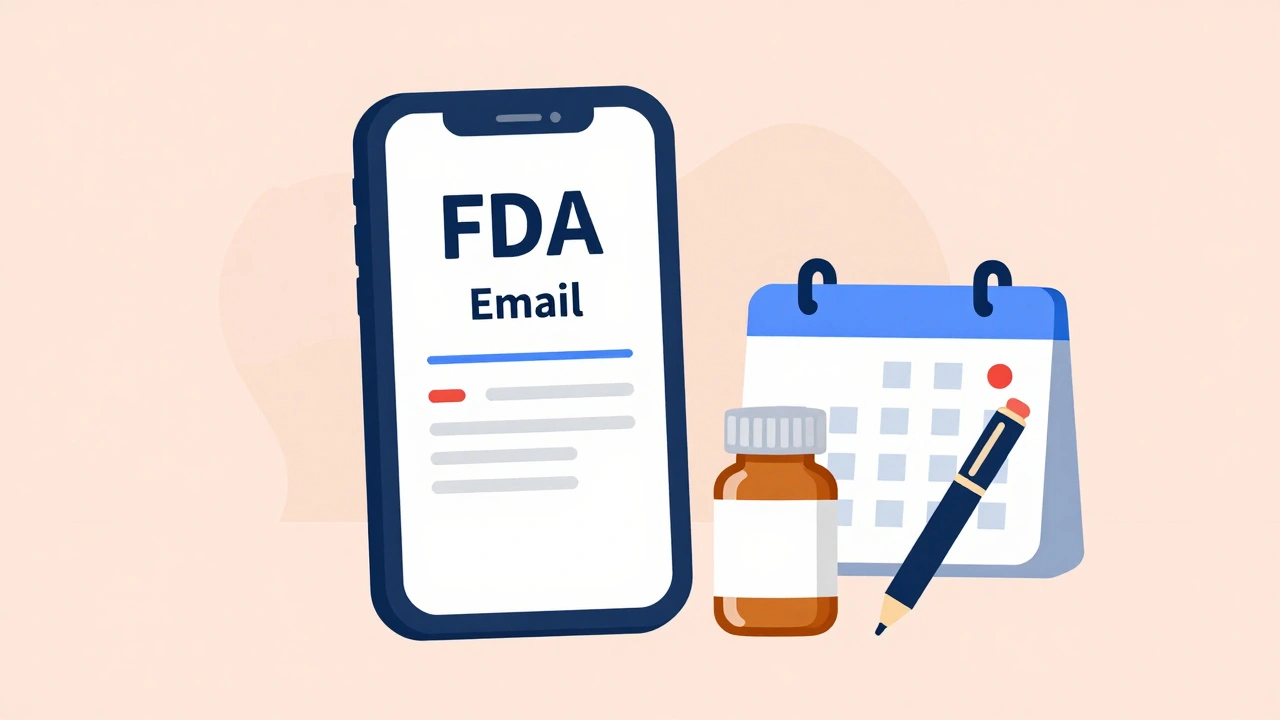
Sign up for FDA email alerts. Go to fda.gov/drugs/drug-safety-and-availability and scroll to the bottom. You can choose to get alerts only for:
- Your specific drug
- Your drug class (e.g., statins, antidepressants, insulin)
- Any drug safety update
That way, you only get notified when something affects you.
Ask your pharmacy to notify you. Many pharmacies now track FDA alerts and will call you if your medication is affected. Ask if they offer this service.
Use your electronic health record. Some systems (like MyChart or Epic) now push FDA alerts directly into your portal. Check your account regularly - especially after a new prescription.
Common Mistakes People Make
People misunderstand these alerts all the time. Here are the top three:
Mistake 1: "It’s just another scare tactic."
Some assume the FDA is overreacting. But these alerts are based on real data. For example, a 2022 alert on the drug Copiktra came after a clinical trial showed it doubled the risk of serious infections compared to other treatments. That’s not hype - that’s science.
Mistake 2: "I’ll just stop taking it."
Stopping a medication suddenly can be dangerous. Blood pressure meds, antidepressants, seizure drugs - stopping cold turkey can cause rebound effects, seizures, or even heart problems. Always talk to your doctor first.
Mistake 3: "I don’t need to read the Medication Guide again."
The FDA requires you to get a new Medication Guide every time you refill. Why? Because the warnings change. What was safe last year might not be safe now. Read it every time.
What’s Changing in 2025?
The FDA is making these alerts easier to understand. Since early 2023, they’ve started testing plain-language summaries for high-risk drugs - available in both English and Spanish. They’re also testing how to send alerts directly to patient portals by the end of 2025.
They’re also moving faster. Under new rules passed in 2022, the FDA must issue safety communications within 30 days of finalizing a major change - down from 60 days. That means you’ll hear about risks sooner.
But there’s still a gap. Studies show it takes, on average, over four years for a serious safety signal to become a labeling change. That’s why your vigilance matters. You’re not just a patient - you’re part of the safety system.
Final Takeaway
FDA Safety Communications aren’t meant to scare you. They’re meant to keep you informed. You don’t need to be an expert to use them. You just need to know where to look and what to do.
When you see one:
- Don’t panic.
- Don’t ignore it.
- Find the "For Patients" section.
- Check your Medication Guide.
- Call your doctor.
That’s it. You’ve done your part. And that’s how you stay safe - one alert, one conversation, one refill at a time.
Are FDA safety communications the same as drug recalls?
No. A drug recall means the product is pulled from shelves because it’s defective, contaminated, or unsafe to use. An FDA safety communication is a warning about a newly discovered risk - but the drug is still available. You may need to change how you take it, but you don’t need to throw it away unless your doctor says so.
What if my medication isn’t mentioned in any safety communication?
That doesn’t mean it’s completely safe. FDA communications focus on the most urgent or widespread risks. Many drugs have known side effects that aren’t new enough to warrant a formal alert. Always read your Medication Guide and talk to your doctor about any concerns, even if no alert has been issued.
Can I trust information about my drug from social media or blogs?
Be very careful. Social media often spreads fear, misinformation, or outdated claims. The FDA is the only official source for up-to-date safety information on approved medications. Always verify any claim by checking fda.gov/drugs/drug-safety-and-availability before making a decision.
How often are FDA safety communications updated?
The FDA issues new Drug Safety Communications every week, but major alerts affecting broad populations happen about once every 5-7 days on average. Some months have more, especially after new clinical trial results are published. Signing up for email alerts ensures you won’t miss the ones that matter to you.
Do these alerts apply to generic drugs too?
Yes. If an alert applies to a brand-name drug, it almost always applies to its generic version too. The active ingredient is the same, so the risks and recommendations are identical. Always check the generic name listed in the alert - not just the brand name.
What if I can’t understand the FDA alert?
Ask your pharmacist. They’re trained to translate complex medical language into simple terms. You can also call the FDA’s Drug Information line at 1-888-INFO-FDA (1-888-463-6332). They can help explain what the alert means and what steps to take.
For more information, visit the FDA’s Drug Safety and Availability page at fda.gov/drugs/drug-safety-and-availability. Always keep your Medication Guide and update your doctor if you notice new symptoms.
Michael Robinson
December 9, 2025 AT 11:22It's wild how we trust pills more than our own bodies. The FDA doesn't know everything, but they're the best we got. Still, if you're taking something long-term, you owe it to yourself to read the damn guide every time you refill. It's not just bureaucracy-it's your life.
Andrea Petrov
December 10, 2025 AT 07:52Of course the FDA 'monitors' drugs after approval... right after they greenlight them based on 6-month corporate-funded trials. They're not protecting you-they're protecting Big Pharma's bottom line. Remember Vioxx? Thalidomide? This is just theater with a fancy website.
Steve Sullivan
December 11, 2025 AT 20:42bro this is actually super helpful 😅 i used to just ignore these alerts like they were spam emails. now i check my med guide every time i pick up a refill. also, the 'boxed warning' thing? mind blown. never knew that black border meant 'this could kill you.' thanks for the clarity 🙌
George Taylor
December 13, 2025 AT 07:40Another feel-good, watered-down, corporate-approved guide. 'Don't panic'-but also don't stop. 'Talk to your doctor'-but they probably haven't read it either. This article reads like an FDA marketing pamphlet. Where's the real data? The whistleblower reports? The hidden conflicts of interest? You're just telling people to trust the system that got us here.
Carina M
December 13, 2025 AT 12:54While the intent of this communication is commendable, the presentation lacks the requisite gravitas and scholarly precision expected of regulatory discourse. The casual tone, emotive phrasing, and colloquialisms undermine the authority and scientific rigor that ought to underpin public health advisories. One would hope for more elevated language when addressing matters of pharmacological safety.
Ajit Kumar Singh
December 14, 2025 AT 19:52India has no such system. We get meds from pharmacies with no warnings at all. Sometimes the label is in Hindi, sometimes English, sometimes just a picture of a red pill. People die because they don't know. You Americans are lucky to have even this much. I read your FDA alerts and cry for my country. Thank you for sharing this. We need this in India.
Maria Elisha
December 16, 2025 AT 15:19So… I just read the guide? That’s it? No app? No notification? No AI telling me if my meds are about to kill me? This feels like 2008.
Angela R. Cartes
December 16, 2025 AT 17:36Ugh. Another one of these 'just read the guide' articles. Like that's gonna help the 70-year-old on 12 meds who can't read past a cereal box. The FDA needs to send alerts to pharmacies to call people. Not everyone has a smartphone or a doctor who answers texts. This is performative safety.
Katherine Chan
December 18, 2025 AT 12:45This is the kind of info that actually saves lives 💪 I used to ignore these alerts too until my mom had a bad reaction to a drug they didn’t warn her about. Now I check every refill. You’re not being paranoid-you’re being smart. Keep doing this. We need more people like you sharing stuff like this. You’re helping more than you know ❤️
Shubham Mathur
December 20, 2025 AT 07:47Good post. But why only English? Many of us in India take these meds but can't read English well. If FDA can make plain language summaries, why not Hindi, Bengali, Tamil? Also, why not send alerts to family members? In many homes, the daughter reads the letter for the parents. The system is broken if it only speaks to the literate elite
Stacy Tolbert
December 21, 2025 AT 12:32I just found out my antidepressant got a new boxed warning. I’ve been taking it for 5 years. I’m not crying, but I’m not okay either. I didn’t even know to look. Thank you for this. I’m calling my doctor tomorrow. I don’t know what to do but I’m not ignoring it anymore.
Taya Rtichsheva
December 22, 2025 AT 23:30So… I’m supposed to trust a government agency that let OxyContin out into the wild? Cool. I’ll just keep taking my pills and hope for the best. 🤷♀️
Christian Landry
December 24, 2025 AT 19:34Wait so if I'm on a generic version of a drug that got an alert… I'm covered? That's huge. I've been taking my generic lisinopril for years and never thought to check if it was affected. I just assumed 'same drug = same risk'. This changed my whole approach. Thanks for laying it out so simply. Also, I'm signing up for the email alerts rn 😎