
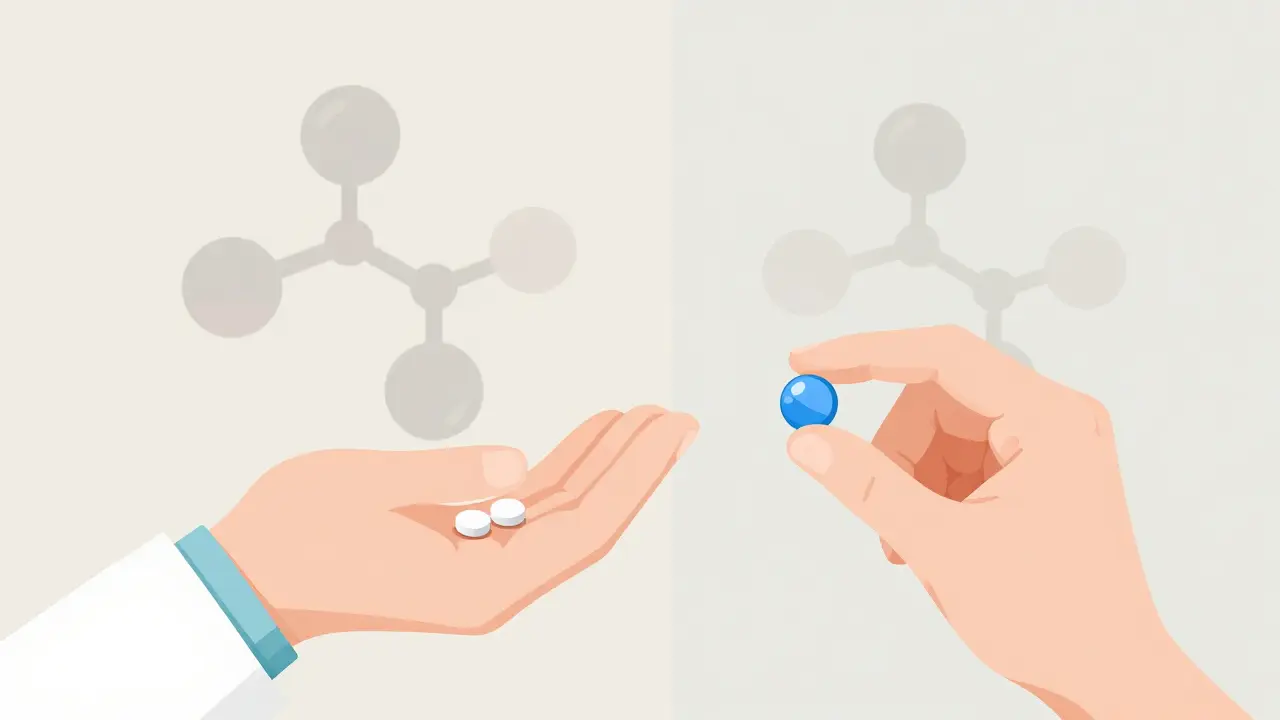
When a patient picks up a prescription and sees a pill that looks completely different from what they’ve been taking, it’s natural to feel uneasy. Generic medications are just as safe and effective as their brand-name counterparts-but that’s not always clear to the person holding the bottle. Many patients assume a different color, shape, or label means it’s a weaker or inferior drug. And if they don’t get a clear, honest explanation, they might stop taking it altogether.
Why Patients Doubt Generics-And Why It Matters
It’s not just about cost. In a 2023 survey of over 2,000 patients, nearly 30% admitted they were worried their generic medication wouldn’t work as well. Even more concerning: 17% reported taking their medication less often after switching from a brand-name drug to a generic. That’s not because the drug failed-it’s because the conversation never happened.
Patients aren’t being irrational. They’ve seen ads for brand-name drugs with glossy imagery and celebrity endorsements. They’ve heard stories from friends who switched and felt "off." Some even blame the generic for side effects that were already there, but now they’re looking for a reason-and the new pill looks suspicious.
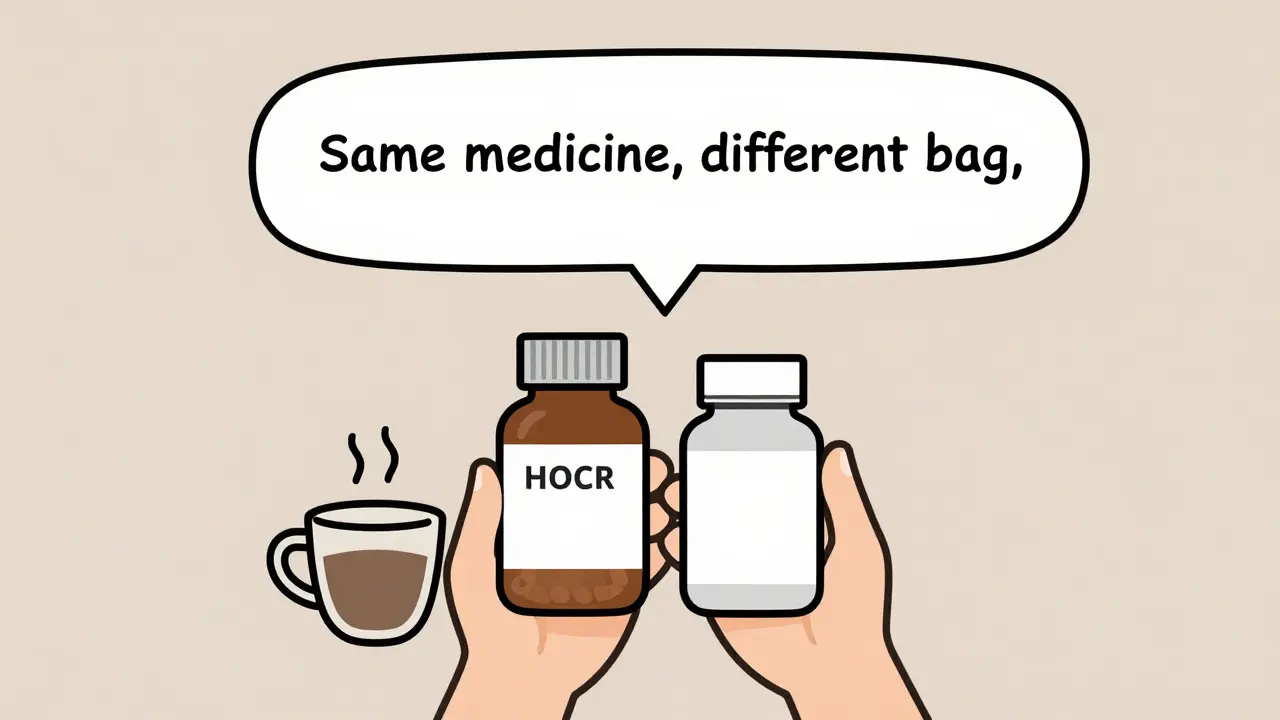
The truth? The FDA requires generic drugs to deliver the exact same amount of active ingredient into the bloodstream at the same rate as the brand-name version. That’s not a suggestion. It’s a strict legal standard. Bioequivalence testing must show results within 80-125% of the original drug’s performance. For most medications, that’s like switching from one brand of coffee to another-same beans, same roast, different bag.
What Generics Actually Are (And Aren’t)
Let’s clear up the confusion. A generic drug must have:
- The same active ingredient (same chemical compound)
- The same strength and dosage form (tablet, capsule, injection, etc.)
- The same route of administration (oral, topical, inhaled)
- The same FDA-approved labeling for use, warnings, and side effects
What’s different? The inactive ingredients. That’s the starch, dye, flavoring, or coating that holds the pill together or makes it look a certain way. These don’t affect how the medicine works-but they can change the color, shape, or taste. And because trademark laws prevent generics from looking identical to brand-name drugs, you’ll often see a white tablet where the original was blue, or a capsule that’s smaller or larger.
Some patients say, "The blue one worked fine, but the white one gave me headaches." In most cases, the headache was already there. But now they’re connecting it to the new pill. That’s why the conversation matters more than the pill itself.
The Cost Difference Isn’t Just a Number-It’s a Lifeline
Generics save patients money. On average, they cost 80-85% less than brand-name drugs. For someone on Medicare taking a monthly medication like rosuvastatin (Crestor), switching to the generic can cut their bill from $300 to under $10. That’s not a minor savings-it’s the difference between taking the drug and skipping doses because they can’t afford it.
Studies show that when cost is removed as a barrier, adherence improves by up to 30%. That’s huge for chronic conditions like high blood pressure, diabetes, or thyroid disease. One patient told me, "I was cutting my pills in half to make them last. Then I got the generic. I haven’t missed a dose since." That’s not a statistic-that’s a life changed.
And it’s not just individuals. The U.S. healthcare system saves $373 billion a year because of generics. That’s money that goes back into hospitals, clinics, and community health programs. When you help a patient choose a generic, you’re not just helping them-you’re helping the whole system.
The TELL Framework: A Simple Way to Talk About Generics
There’s no need for a long lecture. A five-minute conversation can make all the difference. The American Pharmacists Association recommends the TELL method:
- Tell them the generic has the same active ingredient. Say it plainly: "This is the same medicine, just without the brand name."
- Explain why it looks different. "The color and shape changed because of trademark rules-not because the medicine is different."
- Listen to their concerns. Don’t interrupt. Ask, "What’s your biggest worry about this switch?" Sometimes it’s about a bad experience years ago. Sometimes it’s just fear of the unknown.
- Link it to their goals. "You said you want to keep your blood pressure under control so you can play with your grandkids. This pill will do that-and save you $200 a month."
This isn’t marketing. It’s empathy with facts.
What to Do When Patients Still Resist
Some patients will still say no. That’s okay. But don’t give up. Here’s what works:
- Use the teach-back method. Ask them to explain back what you just said. If they say, "So this is just the same drug but cheaper?"-you’ve succeeded. If they say, "I think it’s fake," you’ve got work to do.
- Offer a trial. "Let’s try it for two weeks. If you notice anything different, we’ll switch back."
- Use authorized generics. These are made by the original brand-name company but sold under a generic label. They look identical to the brand. For patients who are deeply skeptical, this can be a bridge.
- Document the conversation. Note their concerns and how you addressed them. That helps future providers understand their history and avoid repeating the same pitch.
And remember: if a patient has been stable on a brand-name drug for years, and you’re switching them just to save money, ask yourself-does it make sense? Not every switch is necessary. But if cost is a barrier to adherence, then switching to a generic isn’t just smart-it’s ethical.
Special Cases: Narrow Therapeutic Index Drugs
Some medications have a narrow therapeutic index-meaning small changes in blood levels can make a big difference. Think warfarin, levothyroxine, or certain seizure drugs. For these, the FDA requires extra scrutiny, and some providers prefer to stick with one manufacturer.
But here’s the catch: the FDA says all approved generics for these drugs meet the same bioequivalence standards. The real issue isn’t the generic-it’s switching between multiple generic manufacturers. A patient might get one brand this month, another next month, and another the next. That’s when confusion and instability creep in.
Best practice? If you’re prescribing a narrow index drug, try to keep the patient on the same generic manufacturer. Ask the pharmacy to fill with the same product unless the patient reports a problem. And if they do report a change in how they feel? Don’t dismiss it. Recheck levels. Adjust if needed. But don’t assume it’s the generic’s fault without evidence.
What Patients Really Say-And How to Respond
Here are the most common questions-and the clearest answers:
- "Is this really the same medicine?" → "Yes. It has the same active ingredient, same dose, same effect. The FDA makes sure of it."
- "Why does it look different?" → "Trademark laws don’t let generics copy the look of brand-name drugs. The medicine inside is identical."
- "Is it as strong?" → "Yes. It delivers the same amount of medicine into your bloodstream at the same rate."
- "I heard generics aren’t tested as much." → "They’re tested the same way. The brand-name drug was tested in clinical trials. The generic is tested to prove it works exactly the same way."
- "I tried one before and it didn’t work." → "That’s tough. Sometimes it’s not the medicine-it’s the switch between different manufacturers. Let’s stick with one that works for you."
These aren’t scripts. They’re tools. Use them to start a conversation-not shut one down.
What’s Changing Now-and What’s Coming
The FDA is investing $5 million in patient education programs to improve understanding of generics. New tools are being tested, like short video explanations shown in pharmacies. Early results show these videos increase patient acceptance by 31% compared to talking alone.
Biosimilars-complex generics for biologic drugs like insulin or rheumatoid arthritis treatments-are entering the market. These are harder to explain because they’re not exact copies. But the same principles apply: same goal, lower cost, same safety standards. The conversation just needs to be more detailed.
And the numbers keep growing. In 2023, 90% of all prescriptions filled in the U.S. were generics. That’s up from 19% in 1984. The trend isn’t slowing. It’s accelerating.
Final Thought: Your Words Matter More Than the Pill
You don’t need to be a pharmaceutical expert to talk about generics. You just need to be honest, calm, and clear. Patients aren’t rejecting generics because they’re dumb. They’re rejecting them because they’re scared.
When you take five minutes to explain what’s in that pill-and why it’s safe-you’re not just filling a prescription. You’re building trust. And trust is what keeps people healthy.

Annette Robinson
January 8, 2026 AT 03:29I’ve seen so many patients panic when their pill changes color. One woman cried because her blood pressure med went from blue to white-she thought the pharmacy gave her the wrong thing. I just sat down with her, showed her the FDA info on my phone, and said, ‘This is the same medicine, just in a different coat.’ She started crying again-but this time because she felt heard. That’s all it takes.
Luke Crump
January 9, 2026 AT 03:15Let me get this straight-you’re telling me that a $300 pill and a $10 pill are identical? That’s not science, that’s capitalism dressed up as medicine. If they’re the same, why does the brand-name version have a $200 marketing budget and a celebrity endorsement? The real generic isn’t the pill-it’s the system that lets corporations profit off fear.
Manish Kumar
January 10, 2026 AT 11:40You know, in India, we’ve been using generics for decades-because we had to. Our healthcare system didn’t have the luxury of paying $300 for a statin. But here’s the thing: the quality varies wildly depending on the manufacturer. Some are excellent, some are barely regulated. So when you say ‘all generics are equal,’ you’re ignoring the global reality. In the U.S., the FDA enforces standards-but in many places, it’s a lottery. That’s why I’m not surprised Americans are confused. We’re used to trusting institutions. They’re not always trustworthy.
Aubrey Mallory
January 11, 2026 AT 02:53Let’s be clear: if a patient refuses a generic because they’re scared, that’s not ignorance-it’s trauma. They’ve been sold lies for years. Brand-name ads made them believe expensive = better. That’s not their fault. It’s the pharmaceutical industry’s. And if you’re a provider who doesn’t take five minutes to explain this, you’re complicit. Stop treating patients like customers. Treat them like people who’ve been lied to-and then fix it.
Dave Old-Wolf
January 11, 2026 AT 20:06I had a guy come in last week saying his generic lisinopril gave him a weird taste. He was convinced it was poisoning him. So I asked him: ‘When did the taste start?’ He said, ‘About a month after I switched.’ Then I asked: ‘Did you start drinking more coffee?’ He paused. ‘Yeah…’ Turns out it wasn’t the pill. It was the new brand of roast he bought. Sometimes the problem isn’t the medicine-it’s the life around it.
Prakash Sharma
January 12, 2026 AT 16:11Why do Americans act like generics are some kind of betrayal? In India, we don’t waste money on fancy packaging. We use what works. The FDA standards? Good. But don’t act like the U.S. invented medicine. We’ve been making good generics since the 1970s. You think your ‘TELL framework’ is revolutionary? We’ve been doing this since before your grandparents were born. Stop acting like you’re saving the world. You’re just catching up.
Donny Airlangga
January 14, 2026 AT 04:31My grandma’s on warfarin. She’s been on the same generic for 5 years. Never had an issue. But when the pharmacy switched her to a different maker last year? Her INR went wild. We went back to the original one. So yeah-sometimes the generic is fine. Sometimes the switch between generics is the problem. Not the generic itself. The instability. That’s the real issue.
Kristina Felixita
January 15, 2026 AT 09:29OMG YES. I had a patient last month who said her thyroid med made her feel "zombie-like" after switching. She was terrified. I pulled up the FDA bioequivalence chart on my tablet, showed her the 80-125% range, and said, "This isn’t magic. It’s math." She laughed. Then she cried. Then she said, "I’ve been cutting my pills in half for years because I couldn’t afford it." We got her on the generic. She’s hiking again. I’m still crying thinking about it.
Lois Li
January 16, 2026 AT 15:38I work in a rural clinic. Most of our patients are on Medicare. One woman told me she’d rather skip her meds than take the "cheap one." I didn’t argue. I just said, "What’s one thing you want to do this year that you can’t do because you’re tired?" She said, "Walk my dog to the park." I said, "This pill lets you do that. And it costs less than your coffee this week." She took it. She walked her dog. That’s all the data I need.
Joanna Brancewicz
January 18, 2026 AT 05:08Bioequivalence. 80-125% Cmax and AUC. Same half-life. Same metabolic pathway. The inactive ingredients are inert. The fear is psychosomatic. The data is clear. The conversation is the intervention.
Evan Smith
January 19, 2026 AT 15:51So let me get this straight: we’re paying $300 for a pill that’s identical to a $10 pill, and the only difference is that the $300 one has a fancy logo and a jingle? And we’re surprised people don’t trust the $10 one? I mean… we’re literally being scammed by marketing. And now we’re supposed to be grateful when someone finally says, "Hey, you’re not dumb. This is the same thing."
swati Thounaojam
January 20, 2026 AT 08:00My mom switched to generic metformin and got stomach cramps. We thought it was the pill. Turns out, she started drinking cold water with it. The brand one was coated, the generic wasn’t. We told her to take it with warm water. Problem solved. It’s not the drug. It’s the habits around it.
Ken Porter
January 21, 2026 AT 17:50Generics are fine. But don’t pretend this is about patient care. It’s about profit. Pharma makes billions off brand-name drugs. Generics are a threat. So they fund studies that make generics look scary. The FDA is underfunded. The system is broken. Stop pretending you’re a hero for explaining a pill. Fix the system.
Molly Silvernale
January 23, 2026 AT 10:11It’s not about the pill-it’s about the story we tell ourselves. We’ve been conditioned to believe that shiny packaging means safety. That price equals power. That if it doesn’t look like the ad, it’s not real. But the truth? The truth is quiet. It’s in the bloodstream. In the labs. In the FDA’s cold, hard numbers. And it doesn’t need a logo. It just needs someone to say, "I believe you."