
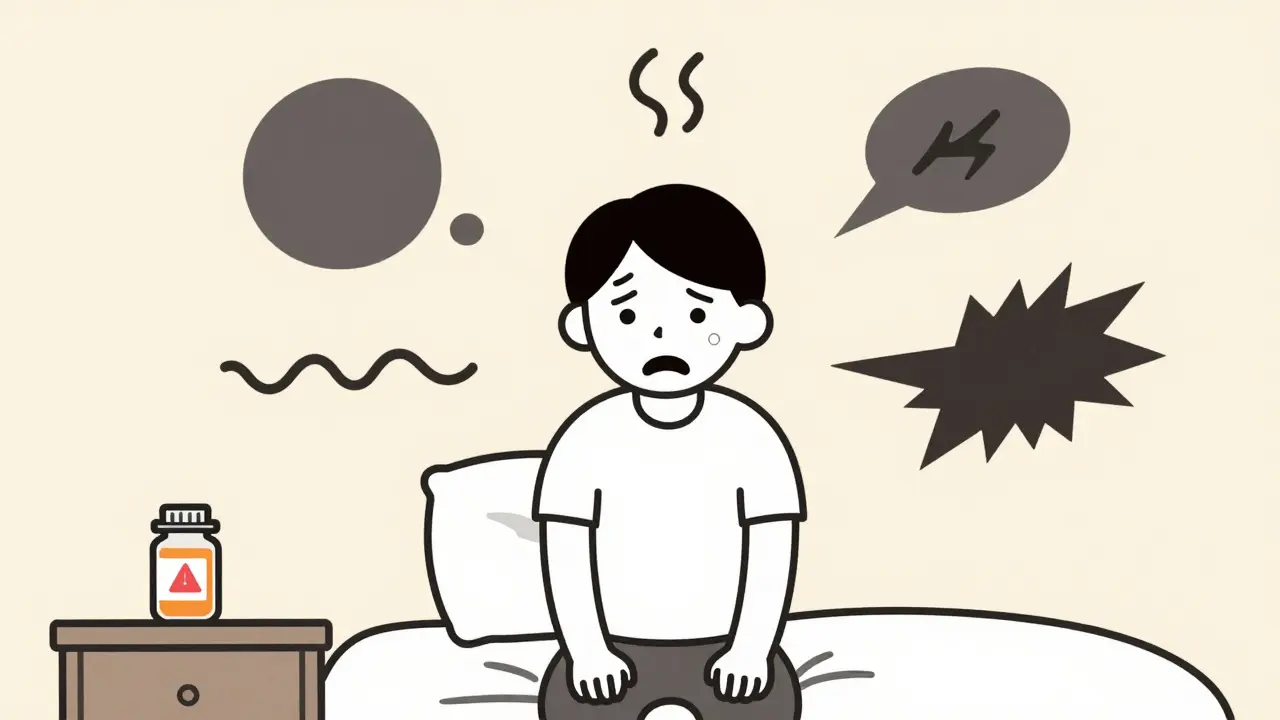
Medication-Induced Psychosis Risk Assessment Tool
Risk Assessment Form
When someone suddenly starts seeing things that aren’t there, believing they’re being followed, or speaking in ways that make no sense, it’s easy to assume it’s schizophrenia or another mental illness. But what if the cause isn’t their brain wiring-it’s a pill they took yesterday? Medication-induced psychosis is more common than most people realize, and it can happen with drugs you’d never suspect-steroids, antibiotics, even over-the-counter sleep aids. The good news? It’s often reversible. The catch? You have to recognize it fast.
What Exactly Is Medication-Induced Psychosis?
Medication-induced psychosis isn’t a mental illness. It’s a reaction. It happens when a drug-prescribed, over-the-counter, or even illegal-triggers psychotic symptoms like hallucinations, delusions, or disorganized thinking. These symptoms aren’t part of the drug’s intended effect. For example, LSD is meant to alter perception, but if someone keeps hearing voices two days after the high wears off, that’s medication-induced psychosis.
The DSM-5, the standard guide doctors use for diagnosis, says these symptoms must appear during or within a month of taking the drug-or during withdrawal. That’s a key difference from schizophrenia, where symptoms stick around for six months or longer. In most cases, once the drug is stopped, the psychosis fades. But if you don’t know what’s causing it, you might end up misdiagnosing someone with a lifelong disorder when they just need to stop a pill.
Common Symptoms to Watch For
The signs don’t always look like what you see in movies. Not everyone screams about aliens or attacks imaginary enemies. More often, it’s subtle at first:
- Paranoia-thinking coworkers are spying, that the TV is sending messages, or that someone’s poisoning their food
- Auditory hallucinations-hearing whispers, footsteps, or voices commenting on their actions
- Confused speech-jumping between topics, using made-up words, or repeating phrases
- Memory lapses and trouble focusing-even simple tasks like paying bills become overwhelming
- Unusual behavior-acting out of character, like stripping off clothes in public or hiding in a closet for hours
These symptoms often show up after starting a new medication or increasing the dose. Sometimes they creep in slowly. With steroids, people might feel anxious or irritable for days before the hallucinations start. With stimulants like Adderall or meth, it can hit fast-within hours. And with alcohol or benzodiazepine withdrawal, psychosis can show up after days of stopping, when people think they’re safe.
Drugs That Can Trigger Psychosis (Even the Ones You Don’t Expect)
It’s not just street drugs. Many common prescriptions can do this:
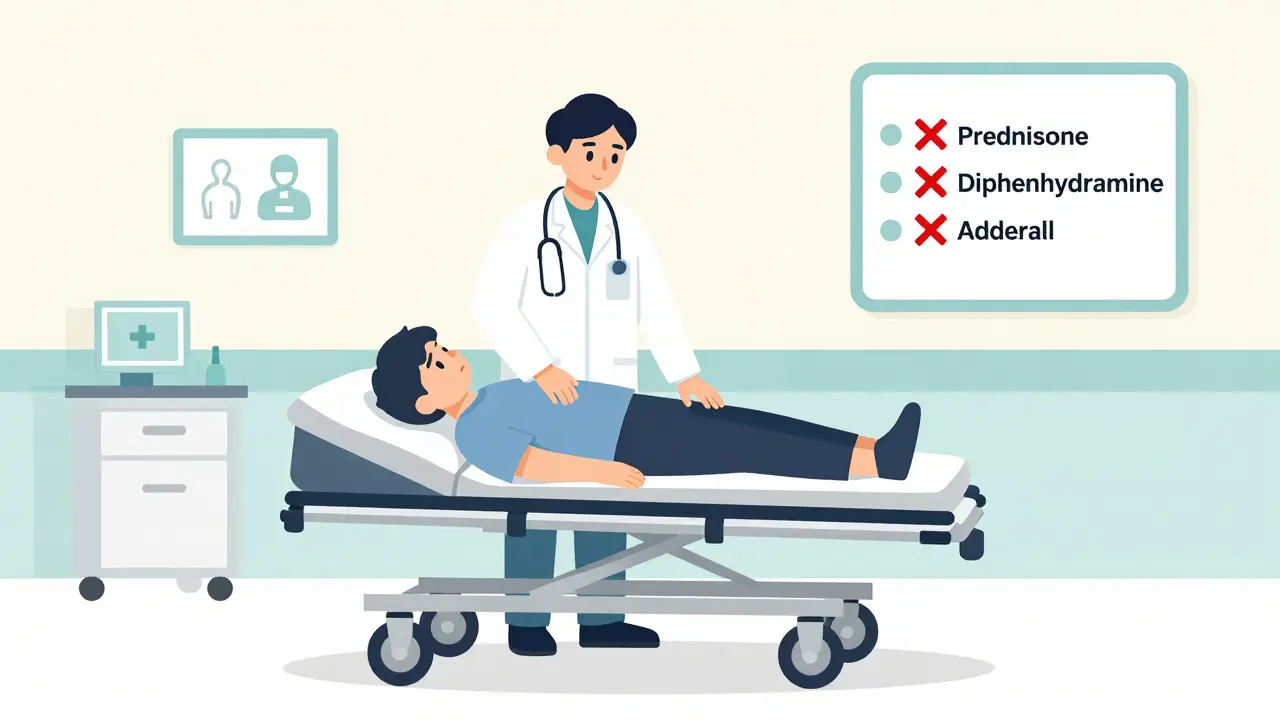
- Corticosteroids (like prednisone)-up to 5.7% of people on high doses develop psychosis. It’s one of the most common drug causes.
- Antimalarials (like mefloquine)-used for travel, but linked to paranoia, hallucinations, and suicidal thoughts.
- Antiretrovirals (like efavirenz for HIV)-about 2.3% of users report severe psychiatric side effects.
- Antidepressants (SSRIs and SNRIs)-rare, but possible, especially in people with no prior mental health history.
- Antiepileptics (like vigabatrin)-1.1% risk of psychosis.
- Stimulants (methylphenidate, amphetamines)-up to 15% of users report psychotic symptoms.
- First-gen antihistamines (like diphenhydramine)-found in sleep aids and cold meds. High doses can cause hallucinations, especially in older adults.
- Opioids and even NSAIDs like ibuprofen-rare, but documented in overdose cases.
And here’s the kicker: medication-induced psychosis accounts for 7-10% of all first-time psychosis cases in emergency rooms. That means nearly one in ten people brought in for their first psychotic break aren’t suffering from schizophrenia-they’re reacting to a drug.
Who’s Most at Risk?
It’s not random. Certain people are far more likely to develop this:
- Those with a history of mental illness-especially schizophrenia, bipolar disorder, or major depression
- Women-studies show higher vulnerability across multiple drug classes
- People with substance use disorders-74% of first-episode psychosis patients have a history of drug or alcohol abuse
- Older adults-slower metabolism means drugs stick around longer, increasing risk
- Those on multiple medications-drug interactions can amplify side effects
And if someone’s already had a psychotic episode from a drug before? They’re at much higher risk if they take it again-even at lower doses.
Emergency Management: What to Do Right Now
If someone is actively hallucinating, paranoid, or acting dangerously, don’t wait. Call 911 or take them to the ER. Here’s what happens next:
- Stop the drug-Immediately. This is the single most important step. But don’t just quit cold turkey if it’s something like alcohol, benzodiazepines, or opioids-withdrawal can be deadly. Let medical staff handle it.
- Stabilize-Emergency teams check vitals, hydration, electrolytes, and rule out infections or metabolic issues. Stimulant-induced psychosis can cause rhabdomyolysis (muscle breakdown), which can kill kidneys if not treated fast.
- Use antipsychotics if needed-Doctors may give olanzapine or quetiapine to calm severe symptoms. But they’re careful. Giving the wrong drug can make things worse if there’s an interaction.
- Monitor for withdrawal-If the trigger was alcohol or benzos, they’ll start a controlled taper to prevent delirium tremens, which can be fatal.
- Consider involuntary hold-If the person is a danger to themselves or others, they may be held under mental health laws for 72 hours for evaluation.
Don’t try to reason with someone in the middle of psychosis. Don’t argue with their delusions. Stay calm. Speak slowly. Say, “I’m here to help you. Let’s get you to a safe place.”
Recovery and Follow-Up
Most people get better-fast. Steroid-induced psychosis clears in 4-6 weeks. Cocaine-induced psychosis? Often gone in 24-72 hours. But recovery isn’t just about stopping the drug. You need to check if something deeper is hiding underneath.
Doctors will monitor for at least three months after symptoms fade. Why? Because sometimes, the drug didn’t cause the psychosis-it just triggered an underlying condition that was already there. If symptoms return after stopping the medication, it’s likely a primary disorder like schizophrenia or bipolar disorder.
For some, especially those with long-term alcohol abuse, the damage may be permanent. Chronic alcohol use can lead to Wernicke-Korsakoff syndrome-a brain disorder from thiamine deficiency that causes lasting memory loss and confusion. That’s not psychosis from a drug. That’s brain damage.
Prevention: How to Avoid It
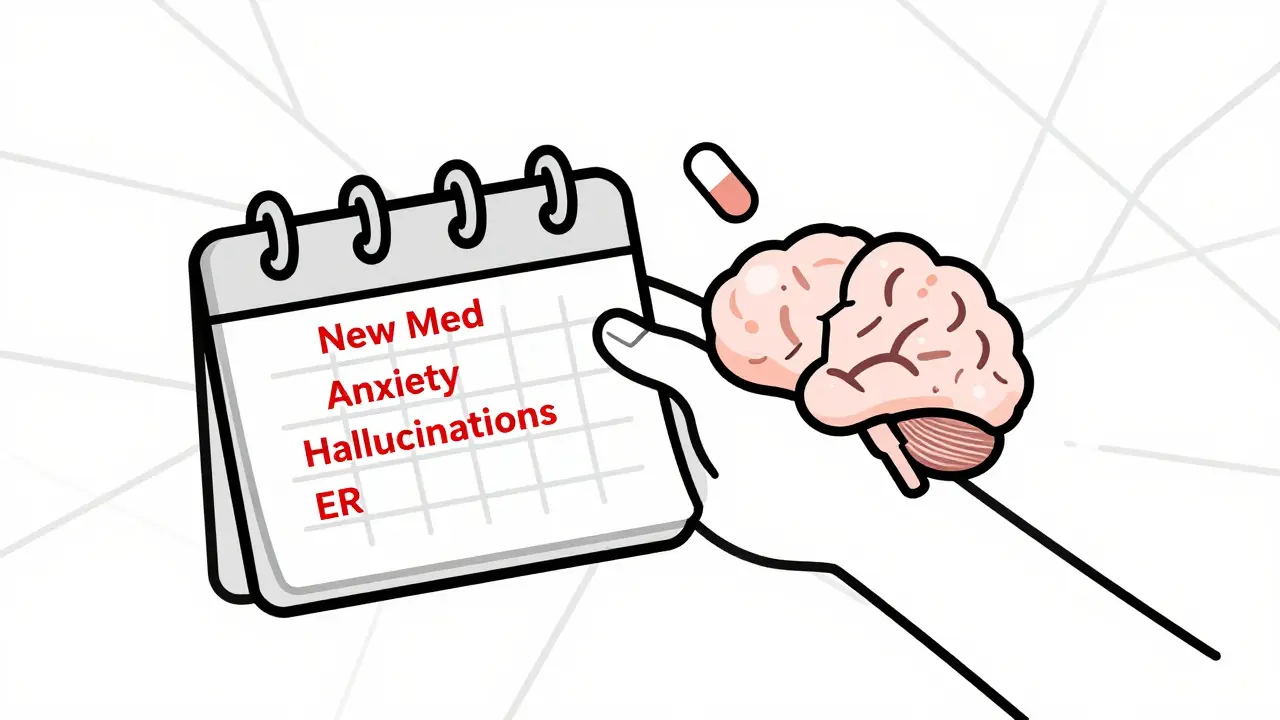
The best way to handle medication-induced psychosis? Don’t let it happen in the first place.
- Ask your doctor: “Can this drug cause mental side effects?” before starting anything new.
- Keep a list of all medications-including supplements and OTC drugs-and share it with every provider.
- Watch for early warning signs: anxiety, insomnia, mood swings, irritability. These can come before full psychosis.
- Don’t mix medications without checking. Even something as simple as NyQuil and an SSRI can create dangerous interactions.
- If you’re prescribed a high-risk drug like steroids or mefloquine, tell your doctor if you’ve ever had depression, anxiety, or psychosis before.
- Read the FDA medication guide. Many drugs with psychosis risk come with a printed warning you’re supposed to get at the pharmacy.
And if you’re caring for someone on these meds-pay attention. A change in behavior isn’t just “stress.” It could be the first sign of something serious.
Why This Gets Missed
Here’s the sad truth: only 38% of primary care doctors feel confident spotting medication-induced psychosis. Most assume it’s “just anxiety” or “a mental breakdown.” But if you don’t consider the drug, you might put someone on lifelong antipsychotics they don’t need.
Doctors are trained to look for schizophrenia first. But the clues are there: symptoms started within days of a new medication. No family history of psychosis. No prior episodes. No drug use outside prescriptions. Those are red flags for medication-induced psychosis.
And with more people taking more meds than ever, this problem is growing. Emergency visits for drug-related psychiatric symptoms rose 17% between 2015 and 2020. It’s not rare. It’s underdiagnosed.
Final Takeaway
Medication-induced psychosis isn’t a life sentence. It’s a warning sign. A signal that a drug is messing with the brain in a way it shouldn’t. If caught early, most people recover fully-no long-term meds, no stigma, no lifelong diagnosis.
But if ignored? It can lead to hospitalization, misdiagnosis, and unnecessary treatment. The key is awareness. Know the signs. Know the drugs. And if something feels off after starting a new medication-don’t wait. Call your doctor. Go to the ER. It’s not panic. It’s prevention.
jeremy carroll
December 16, 2025 AT 19:13Natalie Koeber
December 17, 2025 AT 05:10Rulich Pretorius
December 18, 2025 AT 22:20Dwayne hiers
December 20, 2025 AT 17:17Jonny Moran
December 21, 2025 AT 23:44Alexis Wright
December 23, 2025 AT 11:50Rich Robertson
December 25, 2025 AT 11:32Wade Mercer
December 26, 2025 AT 16:19Daniel Thompson
December 27, 2025 AT 16:54Daniel Wevik
December 29, 2025 AT 08:08Sinéad Griffin
December 30, 2025 AT 16:52Thomas Anderson
December 31, 2025 AT 15:34Sarthak Jain
January 2, 2026 AT 00:04Tim Bartik
January 2, 2026 AT 07:25