
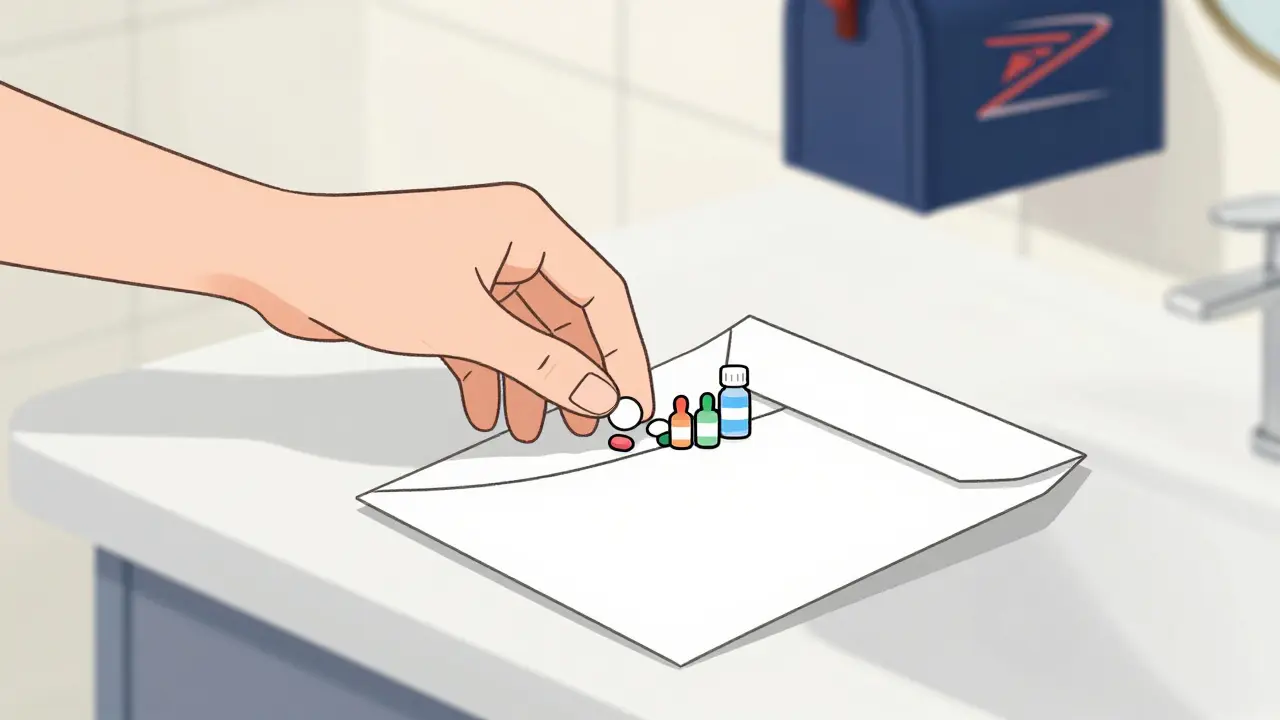
Every year, millions of Americans keep unused or expired medications in their medicine cabinets. Some are saved "just in case," others are forgotten after a course of antibiotics or painkillers ends. But what happens when you finally decide to get rid of them? Flushing them down the toilet? Tossing them in the trash? Those aren’t just bad ideas-they’re dangerous. Medications in landfills can leach into groundwater. Flushed drugs end up in rivers and lakes, harming fish and wildlife. And left unsecured, pills can be stolen, misused, or accidentally swallowed by kids or pets.
There’s a better way: prepaid drug mail-back envelopes. These simple, secure packages let you safely dispose of unwanted medications without leaving your home. No need to drive to a pharmacy, police station, or special drop-off event. Just fill, seal, and mail. It’s that easy.
What Exactly Is a Prepaid Drug Mail-Back Envelope?
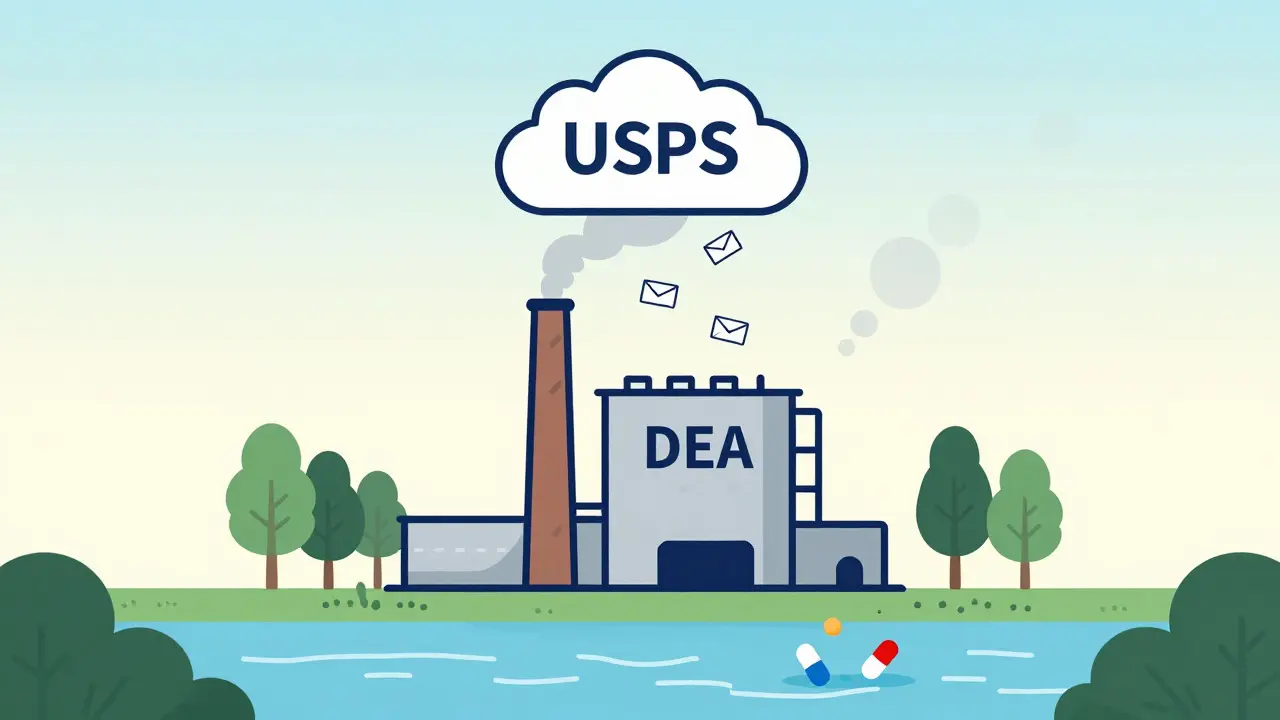
A prepaid drug mail-back envelope is a tamper-proof, pre-addressed envelope provided by approved disposal programs. You put your unused or expired pills, liquids, creams, or patches inside, seal it, and drop it in any U.S. Postal Service mailbox. The envelope is already stamped and labeled for delivery to a DEA-registered facility where the contents are destroyed by high-temperature incineration. No one can access what’s inside after you seal it. Your identity stays private. The environment stays protected.
The U.S. Food and Drug Administration (FDA) calls these envelopes "one of the best ways to safely dispose of unused or expired prescription and nonprescription medicines." They’re not new-this system grew out of the Secure and Responsible Drug Disposal Act of 2010, which gave pharmacies and manufacturers legal permission to offer take-back options beyond just in-person collection events. Today, dozens of companies offer these envelopes nationwide.
What Can You Put in These Envelopes?
Not everything goes in. These envelopes are designed for solid and liquid medications-not sharps, aerosols, or illegal drugs. Here’s what’s accepted:
- Expired or unused prescription pills and tablets
- Over-the-counter medicines like ibuprofen, acetaminophen, or allergy pills
- Patch medications (like fentanyl or nicotine patches)
- Liquids and lotions (up to 4 ounces total per envelope)
- Veterinary medications for pets
- Medication samples from doctors
And here’s what you cannot put in:
- Needles, syringes, or sharps (use a dedicated sharps container)
- Aerosol cans or inhalers (they require special disposal due to pressure)
- Controlled substances that are Schedule I (like heroin or LSD-these aren’t legally prescribed)
- Chemotherapy drugs or radioactive materials
- Any non-medical items like batteries, cosmetics, or food
Some states have special programs for inhalers. For example, Med Take Back California offers separate mail-back kits just for inhalers. Always check the envelope’s instructions or the provider’s website before packing.
How Much Can You Fit in One Envelope?
Most prepaid envelopes allow up to 8 ounces of medication by weight. That’s roughly the volume of a small medicine bottle or a handful of pills. If you have a large collection-say, from an elderly parent’s medicine cabinet-you’ll need more than one envelope.
Don’t try to cram too much in. Overfilled envelopes may not seal properly, which could delay or block processing. If you’re unsure how much you have, weigh it on a kitchen scale. A standard bottle of 100 pills usually weighs between 2 to 4 ounces. So 8 ounces gives you room for two or three full bottles, plus a few extra packets or creams.
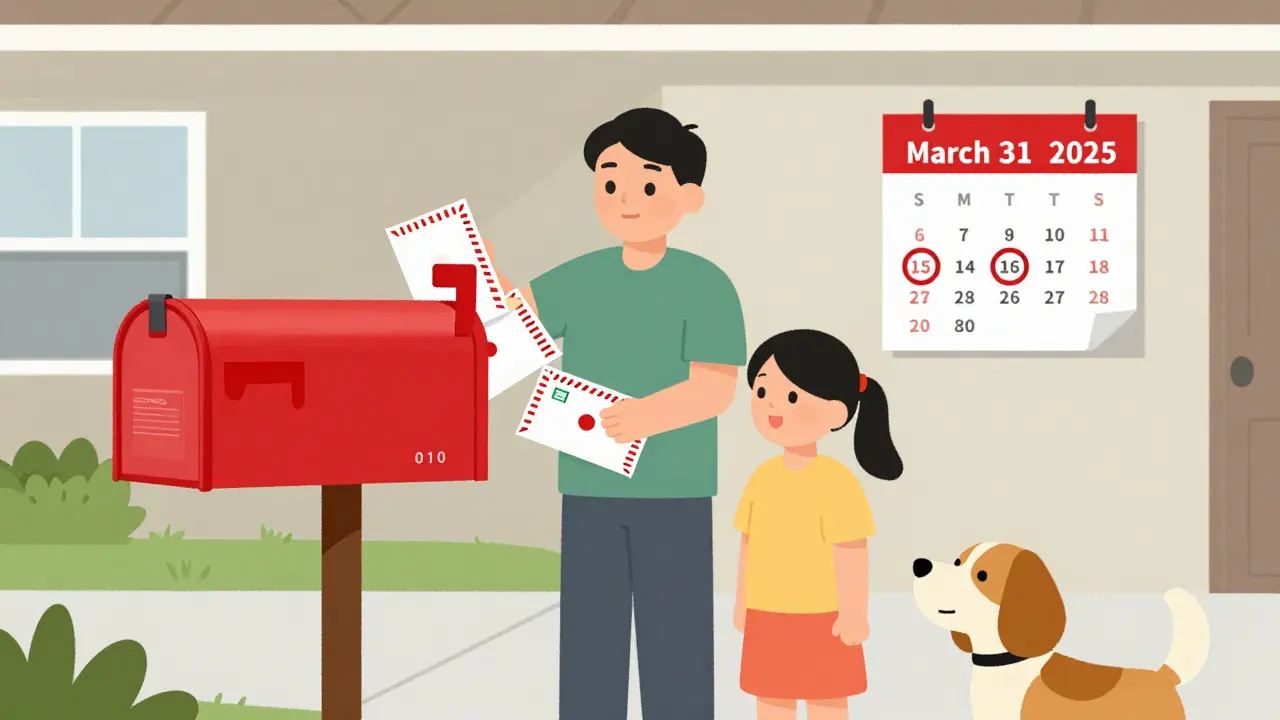
How to Use a Mail-Back Envelope: A Simple 4-Step Process
Using these envelopes takes less than five minutes. Here’s how:
- Order or pick up the envelope. You can get them online from providers like Mail Back Meds, Stericycle, American Rx Group, or from participating pharmacies. Some pharmacies give them out for free.
- Fill the envelope. Remove pills from their original bottles and place them directly into the envelope. If you leave pills in the bottle, make sure to scratch out your name, address, and prescription number with a permanent marker. Liquids go in sealed containers, but don’t exceed 4 ounces total.
- Seal the envelope. Most envelopes have a peel-and-stick seal. Once sealed, it’s tamper-evident-any attempt to open it will be obvious. Some providers include a special orange tape for extra security. Don’t tape it yourself with regular packing tape.
- Mail it. Drop the sealed envelope into any U.S. Postal Service mailbox. That’s it. No stamps needed. No trips to the pharmacy. No waiting for a take-back day.
Some companies, like Mail Back Meds, offer online tracking. After you mail it, you can log in to see when it was received and when it was incinerated. This isn’t required, but it gives peace of mind.
Who Offers These Envelopes?
Several companies provide mail-back envelopes, each with slight differences:
- Mail Back Meds sells packs of 3, 50, or 250 envelopes online. They offer tracking and emphasize eco-friendly disposal aligned with EPA guidelines.
- Stericycle’s Seal&Send targets organizations like hospitals, nursing homes, and pharmacies. They provide reporting tools for bulk disposal and help businesses show they’re committed to safety and sustainability.
- American Rx Group partners with waste-to-energy facilities that turn medications into electricity. Their envelopes are legal in all 50 states and have no hidden fees.
- The Opioid Analgesic REMS Program launches March 31, 2025. This is a government-mandated program where manufacturers of opioid painkillers will provide free mail-back envelopes through pharmacies. If you or someone you know uses opioids, this will be a major new resource.
You can also find free envelopes through local health departments or nonprofit groups like the Drug Takeback Solutions Foundation, which maintains a searchable map of drop-off locations and free mail-back programs.
Why This Is Better Than Flushing or Trashing
Throwing pills in the trash? Someone could dig through your garbage and find them. Even if you crush them, they’re still potentially dangerous. Flushing? The EPA confirms that pharmaceuticals in waterways are linked to hormone disruption in fish and other aquatic life. Studies have found traces of antidepressants, birth control, and antibiotics in drinking water supplies across the U.S.
Mail-back envelopes solve both problems. They’re secure. They’re private. And they’re incinerated at high temperatures-completely destroying the chemicals. No runoff. No landfill contamination. No chance of misuse.
The DEA collected over 1 million pounds of unused medications during its 2022 National Prescription Drug Take Back Day. That’s a lot of pills. But that’s just one day. Mail-back envelopes make safe disposal possible every day, for everyone.
What to Watch Out For
Even with a simple process, mistakes happen:
- Don’t take the filled envelope to your pharmacy. Many people assume pharmacies accept them. They don’t. These envelopes are meant to go to the post office, not the counter.
- Don’t use regular tape. Only use the seal provided. Extra tape can interfere with scanning or sorting systems.
- Check if your pharmacy participates. Not all pharmacies hand out envelopes. Call ahead or visit the provider’s website to find the nearest location.
- Don’t forget to remove personal info. Even if you’re putting pills directly into the envelope, if you leave the bottle inside, black out your name and prescription number. Privacy matters.
What’s Coming in 2025
The biggest change is coming March 31, 2025. Under the new Opioid Analgesic REMS program, manufacturers of opioid painkillers will be required to provide free mail-back envelopes to pharmacies. That means if you’re prescribed an opioid like oxycodone or hydrocodone, your pharmacist will likely hand you a prepaid envelope when you pick up your prescription. You can return it anytime-no cost, no hassle.
This program is a direct response to the opioid crisis. In 2023 alone, over 70,000 Americans died from drug overdoses, many involving prescription opioids. Keeping unused pills at home increases risk. This initiative could save lives.
Final Thoughts: It’s Simple, Safe, and Necessary
Prepaid drug mail-back envelopes aren’t magic. They’re practical. They’re legal. They’re backed by federal agencies and environmental experts. And they’re available right now-online, at pharmacies, or through community health programs.
If you have old medications sitting in your bathroom cabinet, don’t wait. Don’t flush. Don’t toss. Get an envelope. Fill it. Mail it. You’re protecting your family, your community, and the environment. And it takes less time than scrolling through your phone.
Safe disposal isn’t optional anymore. It’s responsibility. And with mail-back envelopes, it’s never been easier.
Can I use a mail-back envelope for my pet’s medication?
Yes. Most prepaid drug envelopes accept veterinary medications, including pills, liquids, and topical treatments for dogs, cats, and other pets. Just make sure they’re not controlled substances that are illegal to possess. If you’re unsure, check the provider’s list of accepted items.
Do I need to remove pills from their bottles before putting them in the envelope?
You don’t have to, but it’s recommended. If you leave pills in their original bottles, make sure to scratch out your name, address, and prescription number with a permanent marker. The envelope is anonymous, but your personal info on the bottle isn’t. Removing pills and placing them directly into the envelope is the cleanest, safest option.
Are these envelopes free?
Some are, some aren’t. Many pharmacies give them out for free, especially through local health programs. Online providers like Mail Back Meds and American Rx Group sell them in packs. The upcoming Opioid Analgesic REMS program (launching March 31, 2025) will offer free envelopes specifically for opioid painkillers through participating pharmacies.
Can I mail multiple envelopes at once?
Yes. You can drop multiple sealed envelopes into the same mailbox. Each one will be processed individually. If you’re disposing of a large amount-say, from a relative’s home-you might need 5 or 10 envelopes. There’s no limit on how many you can mail.
What if I accidentally put a needle or inhaler in the envelope?
Don’t worry-most facilities have procedures to handle accidental contamination. But you should never intentionally put needles, sharps, or inhalers in these envelopes. Needles require a sharps container and special disposal. Inhalers need to be returned to pharmacies that accept them or taken to a hazardous waste facility. Always check the list of accepted items before packing.
How do I know the medications are really destroyed?
All mail-back envelopes go to DEA-registered facilities that use high-temperature incineration-so the drugs are completely burned, not buried or recycled. Many providers offer tracking portals where you can see when your envelope was received and destroyed. The FDA and DEA require strict documentation to ensure compliance. You’re not just trusting them-you’re using a system designed and monitored by federal regulators.
Greg Quinn
December 30, 2025 AT 19:24It’s wild how we’ve normalized hoarding pills like they’re collectible coins. I’ve got a drawer full of expired antibiotics from 2018 - never thought twice about it until I read this. Now I feel like a tiny villain every time I walk past my medicine cabinet. This system is low-effort, high-impact. Why isn’t this mandatory with every prescription? Just hand people the envelope with the script. Simple.
Also, pets getting meds disposed of? That’s quietly brilliant. My dog’s thyroid pills were sitting there for two years. No one talks about vet meds, but they’re just as dangerous if they end up in the wrong paws.
Jim Rice
December 30, 2025 AT 20:23This is government overreach wrapped in eco-hippie packaging. If you’re dumb enough to keep expired meds, you deserve whatever happens. Why should taxpayers fund this? The DEA doesn’t need to track your ibuprofen. And who says incineration is better than landfill? At least in landfills, it’s contained. Burning creates emissions. You’re trading one problem for another. This is virtue signaling with a postage stamp.
Henriette Barrows
January 1, 2026 AT 13:29Okay, I just mailed my first envelope yesterday - filled it with my grandma’s leftover painkillers and her old blood pressure meds. She passed last year and I kept everything ‘just in case.’ Honestly? I felt so guilty. This felt like the first real act of closure I’ve done since she died.
It took 5 minutes. No drama. No guilt trip. Just a sealed envelope and a quiet sense of peace. If you’ve got old meds sitting around - do this. Not for the planet. Do it for the person who used to take them. They’d want you to let go safely.
Alex Ronald
January 2, 2026 AT 01:54Just a quick note: if you’re using a mail-back envelope, don’t mix in anything with alcohol or liquid antiseptics. I made that mistake once - the envelope leaked and the post office flagged it as hazardous. Not a big deal, but it delayed processing by 3 days. Stick to meds only. Also, if you’re mailing multiple envelopes, drop them all in the same mailbox. They’re sorted by barcode, not by volume. No need to make extra trips.
Teresa Rodriguez leon
January 2, 2026 AT 05:42I’ve seen this system in action at my local clinic. A woman came in crying because her teen had found her Xanax bottles. She didn’t know what to do. We gave her three envelopes. She mailed them that afternoon. Two weeks later, she sent a thank-you note. Said she slept better for the first time in years. This isn’t about disposal. It’s about dignity. About safety. About not being the reason your kid almost died because you didn’t know how to let go. This system gives people grace. Don’t underestimate that.
Janette Martens
January 2, 2026 AT 11:20Why the hell are we using US postal service for this? Canada has a national takeback system. No envelopes needed - just drop off at any pharmacy. You get a receipt. No tracking, no fees. Why are we stuck with this patchwork of private companies? This feels like American capitalism making a problem more complicated to sell you a solution. Also, why do they spell ‘incineration’ with 3 r’s? That’s not even a word.
Aliza Efraimov
January 4, 2026 AT 04:53Let me tell you about my aunt. She was on 17 different meds after her stroke. Her cabinet looked like a pharmacy exploded. We found expired anticoagulants, antidepressants from 2015, even a bottle of children’s Tylenol from her grandkid’s visit. She didn’t know half of them were useless. We got 7 envelopes. She cried when she mailed them. Said, ‘I didn’t realize how much I was holding onto.’
Then she started taking walks again. Said the space in her cabinet felt like freedom. This isn’t just about drugs. It’s about clearing out the ghosts. And yeah - I cried too. Don’t let anyone tell you this is just logistics. It’s healing.
Emma Duquemin
January 6, 2026 AT 02:56Okay, I just did a full medicine cabinet purge. Took me 20 minutes. Got 4 envelopes. Filled them with everything from my college anxiety meds (2019, never used) to my partner’s leftover opioids (he’s been clean for 3 years). I even threw in my cat’s flea pill - yeah, it’s allowed. Felt like spring cleaning for my soul.
And here’s the kicker: I didn’t feel sad. I felt powerful. Like I finally took back control. No more ‘what if’ bottles. No more midnight panic when I see a pill I don’t recognize. This system? It’s not just safe. It’s liberating. If you’re hesitating - just do it. Your future self will high-five you.
Kevin Lopez
January 7, 2026 AT 10:29DEA-registered incineration facility. 1200°C. Complete mineralization. No leachate. No bioaccumulation. Compliance with 21 CFR 1317.22. Mail-back envelopes are the only compliant method under the Secure and Responsible Drug Disposal Act. Non-compliant disposal = federal violation. You’re not ‘being eco.’ You’re breaking the law. Stop romanticizing trash. This is regulatory hygiene.
Duncan Careless
January 9, 2026 AT 02:44Interesting read. I’ve used these envelopes for my mum’s meds after her hip surgery. Simple, quiet, effective. I did notice one thing though - the envelopes don’t always arrive in time if you order online. Took 10 days once. Maybe keep a few on hand? Also, don’t forget to write your name on the outside of the envelope if you’re mailing for someone else - just in case the facility needs to contact the sender. Small thing, but helpful.