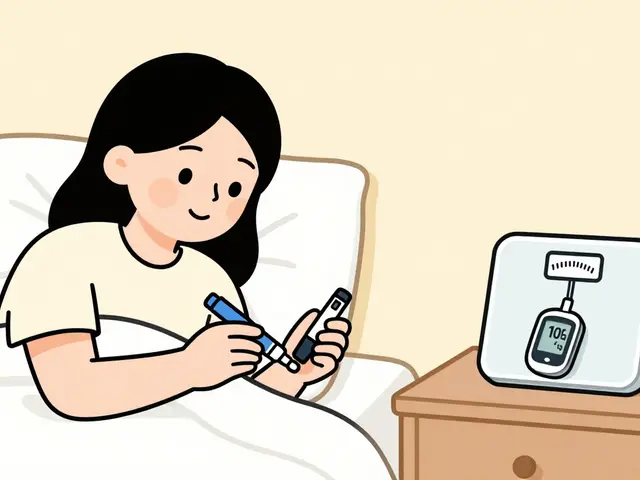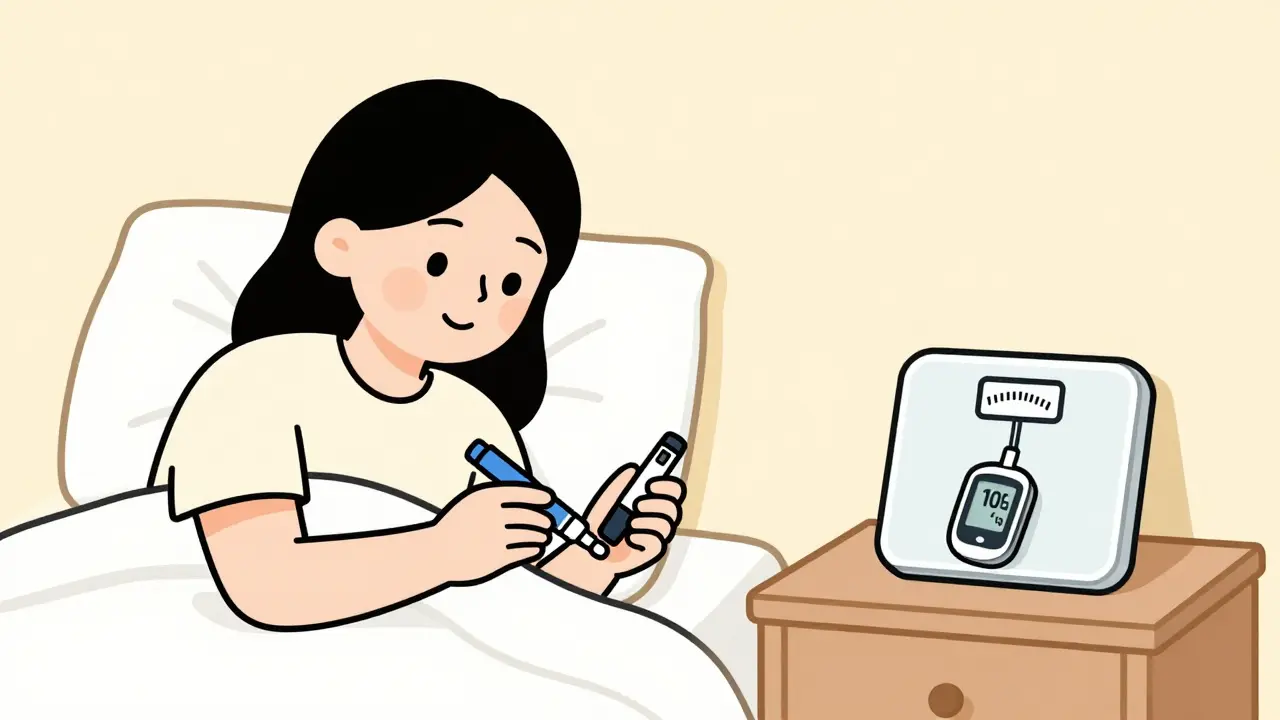
Imagine waking up one day and realizing you no longer need to take insulin or pills to control your blood sugar. No more finger pricks before breakfast. No more counting carbs just to keep your numbers in range. For many people with type 2 diabetes, this isn’t a fantasy-it’s a real possibility. Remission in type 2 diabetes is no longer a rare outlier. It’s a documented outcome, backed by years of clinical research and now formally recognized by global medical organizations.
But here’s the catch: remission doesn’t mean you’re cured. It means your body has regained control-temporarily. And that control depends almost entirely on one thing: weight loss. Not a little. Not a few pounds. We’re talking about losing at least 10 kilograms (22 pounds), and often more. And once you reach that point, something remarkable happens: your pancreas starts working again. Your liver stops flooding your bloodstream with excess sugar. And if you’re lucky, your doctor might say you can stop taking your diabetes meds.
What Does Remission Actually Mean?
The official definition of remission was settled in 2021 by the American Diabetes Association, the European Association for the Study of Diabetes, and Diabetes UK, among others. It’s simple: your HbA1c level must stay below 6.5% (48 mmol/mol) for at least three months-with no glucose-lowering medications in your system. That’s it. No exceptions. If you’re still on metformin, GLP-1 agonists, or insulin, even if your numbers are perfect, you’re not in remission. You’re just well-controlled.
This standard was created because, before 2021, every study used its own rules. Some called remission if HbA1c dropped below 7%. Others required fasting glucose under 100 mg/dL. The inconsistency made it hard for doctors to know what to tell patients. Now, there’s a clear line: no meds + stable low HbA1c = remission.
And if HbA1c isn’t reliable-say, because of anemia or kidney disease-you can use other markers. A fasting blood sugar under 126 mg/dL (7.0 mmol/L) or an estimated HbA1c from continuous glucose monitoring (CGM) data can also count. But again, meds must be off the table.
How Much Weight Loss Do You Really Need?
The DiRECT trial, one of the most influential studies on this topic, gave us the clearest answer. Participants who lost 10 kilograms or more had a 46% chance of going into remission after one year. That’s nearly half. And those who lost 15 kilograms? Over 80% went into remission.
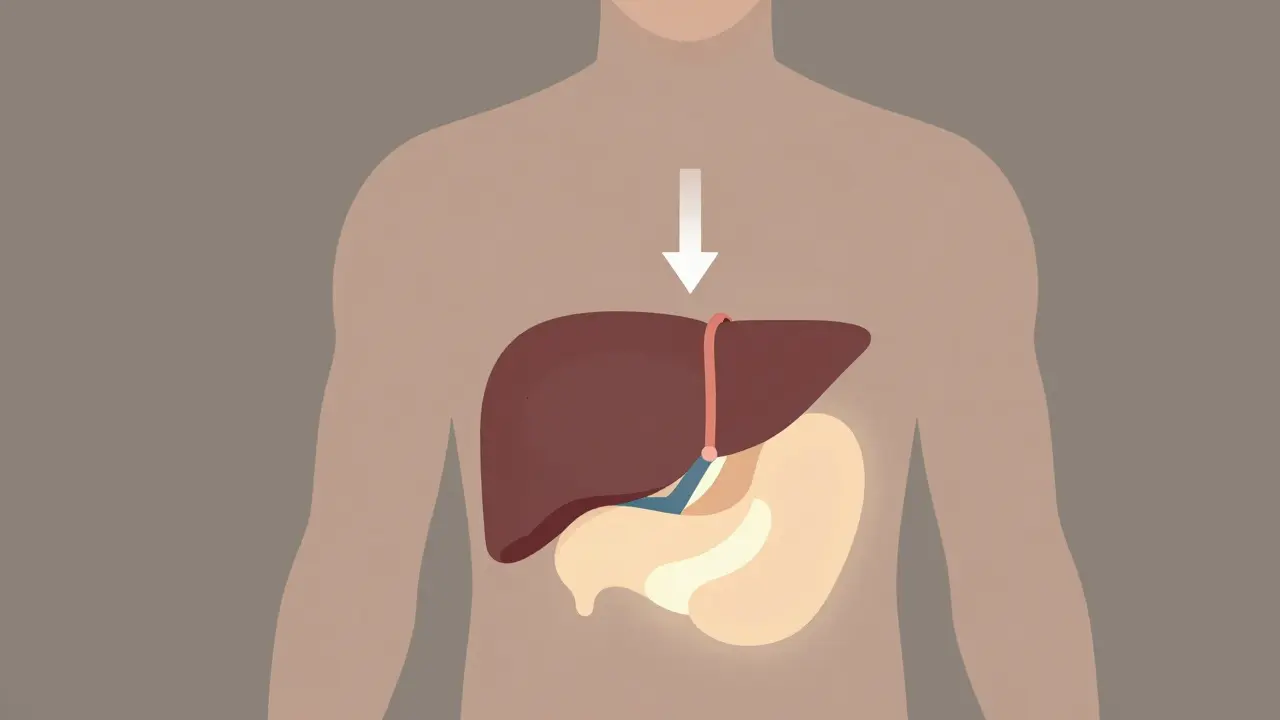
It’s not magic. It’s biology. Excess fat, especially around the liver and pancreas, interferes with insulin production and sensitivity. When you lose that fat, the pancreas can start producing insulin again. The liver stops overproducing glucose. Blood sugar normalizes on its own.
The data is consistent across studies. The DiRECT-Aus trial in Australia showed similar results using total diet replacement. The ARMMS-T2D trial, which looked at metabolic surgery, found 37.5% of patients were in remission after three years. That’s impressive-but surgery isn’t for everyone. The real takeaway? You don’t need surgery. You need to lose weight.
And it’s not about being thin. It’s about losing fat from the organs that matter. Even people who aren’t obese can go into remission if they lose enough weight relative to their body composition. A 5’8” man weighing 210 pounds might need to drop to 180. A woman who’s 5’4” and weighs 190 might need to get down to 160. The number isn’t the same for everyone-but the effect is.
Who Has the Best Chance?
Not everyone has the same odds. The odds improve dramatically if you:
- Have had type 2 diabetes for less than five years
- Are not on insulin
- Start with an HbA1c under 8%
- Are under 60 years old
Why? Because the longer you’ve had diabetes, the more your beta cells-the insulin-producing cells in your pancreas-have worn out. If you’ve been on insulin for years, your body may have stopped making its own insulin entirely. That’s harder to reverse.
But even if you’ve had it for a decade, don’t give up. The goal isn’t perfection. It’s progress. One study showed that people who lost weight and stayed in remission for two years had a 70% lower risk of heart disease than those who didn’t. That’s not a cure. But it’s a huge win.
What Happens When You Stop the Medications?
De-escalating meds isn’t as simple as just quitting. You can’t suddenly stop insulin and expect your body to pick up the slack. The process has to be slow, monitored, and guided.
Typically, doctors will:
- Start with lifestyle changes-diet, movement, sleep-for at least 3-6 months
- Monitor HbA1c every 3 months
- Slowly reduce medication doses as glucose improves
- Only stop completely once HbA1c is below 6.5% for three straight months
For example, someone on metformin might go from 1000 mg twice daily to 500 mg once daily, then to every other day, then stop. Someone on a GLP-1 agonist might drop from 2.4 mg to 1.7 mg, then to 1.2 mg, then discontinue.
Insulin is trickier. It usually requires switching to oral meds first, then tapering. Never stop insulin cold turkey. That’s dangerous.
And here’s the key: you still need checkups. Even in remission. Blood pressure, cholesterol, kidney function, eye exams-they don’t stop just because your sugar’s normal. The risk of heart disease doesn’t vanish. The damage from years of high blood sugar doesn’t magically heal.
Remission Isn’t Forever-But It’s Worth It
Let’s be honest: most people regain some weight. That’s human. The DiRECT study found that after two years, remission rates dropped from 46% to 36%. After five years? It’s likely lower. But here’s the thing: even if you slip back into diabetes, you’ve bought yourself time. Time without complications. Time without daily pills. Time without the fear of amputation or blindness.
Think of it like this: you didn’t just lower your HbA1c. You rewired your metabolism. You taught your body how to handle food again. You reduced inflammation. You lowered your blood pressure. You lost visceral fat. Those changes don’t disappear overnight.
And if you go back to your old habits? Your body remembers. It’s harder to regain remission the second time. But it’s not impossible. Many people who relapse go into remission again after another round of weight loss.
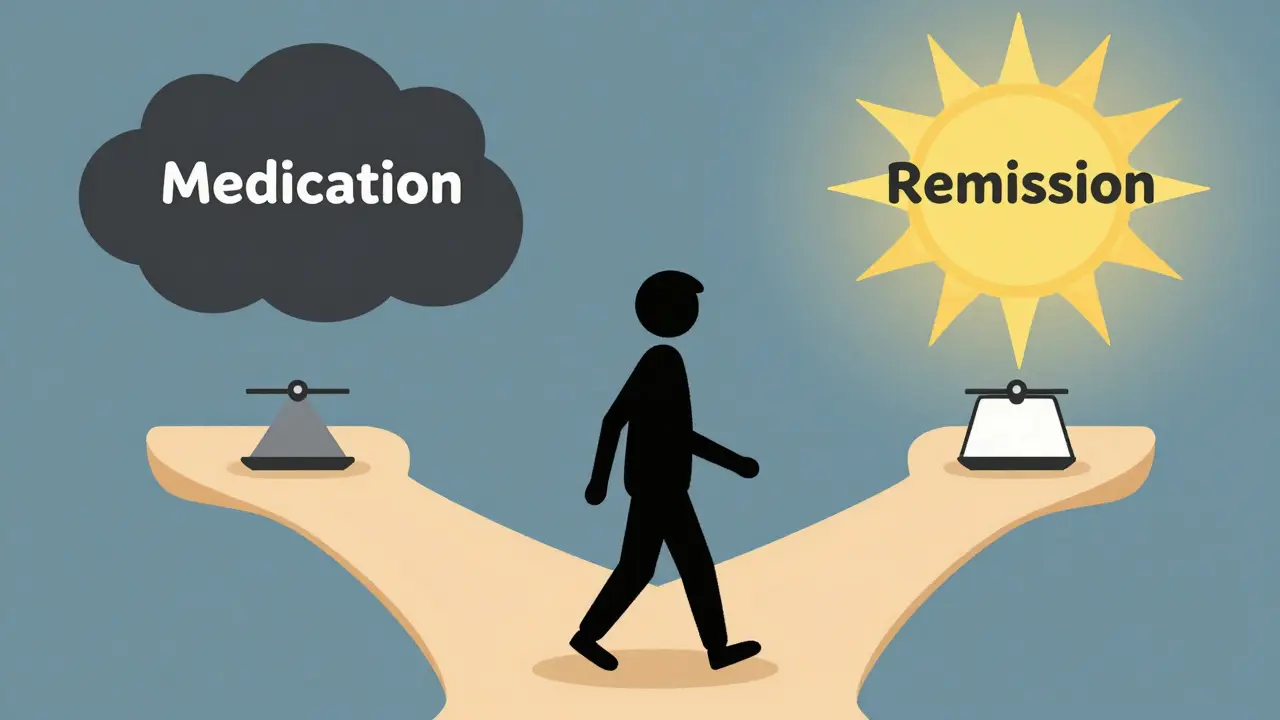
There’s no guarantee. But there’s a path. And that path starts with one decision: lose weight. Not to look better. Not to fit into smaller jeans. But to give your pancreas a second chance.
What Experts Still Don’t Know
Even with all the progress, big questions remain. How long will remission last? What triggers a relapse? Can we predict who will succeed? Right now, we can’t. Some people stay in remission for 10 years. Others bounce back in six months.
Experts like Dr. Roy Taylor from Newcastle University say the current definition-6.5% HbA1c for three months-is a starting point, not the final word. Maybe in five years, we’ll define remission as 6.0% for six months. Maybe we’ll use liver fat scans instead of HbA1c. Maybe we’ll find genetic markers that tell us who’s most likely to respond.
And then there’s the question of meds. Dr. Michael Nauck suggests we might need a second category: remission while on weight-loss drugs like semaglutide. Because if you’re on semaglutide, lose 20 pounds, and your HbA1c is 5.8%, are you in remission? Or are you just medicated?
That’s a gray area. And it’s one we’ll need to clarify as more people use these drugs for weight loss.
What Should You Do Next?
If you have type 2 diabetes and want to aim for remission:
- Work with your doctor to create a weight-loss plan-not a diet, a lifestyle shift
- Focus on protein, fiber, and whole foods. Cut out sugary drinks, ultra-processed snacks, and refined carbs
- Move daily. Even 30 minutes of walking helps
- Track your HbA1c every 3 months
- Don’t rush to stop meds. Let your body adjust
- Keep seeing your doctor-even if you feel fine
And if you’re not ready to lose weight yet? That’s okay. But know this: every pound you lose improves your odds. Even 5 kilograms. Even 2. It’s not all or nothing. Progress matters.
Remission isn’t about perfection. It’s about possibility. And right now, for the first time in history, we have real evidence that type 2 diabetes can be turned back-for many, if not all.
Can type 2 diabetes be cured?
No, type 2 diabetes cannot be cured. Remission means your blood sugar is normal without medication, but the underlying tendency for high blood sugar remains. Fat can return to the liver and pancreas, and blood sugar levels may rise again. That’s why ongoing healthy habits are critical-even after remission.
Do I still need to check my blood sugar if I’m in remission?
Yes. Even if you’re not taking meds, you should still get your HbA1c tested at least once a year. Some people develop high blood sugar again without symptoms. Regular monitoring catches it early. Also, keep up with eye exams, kidney checks, and foot exams. Diabetes complications don’t disappear just because your sugar is normal.
Can I stop my diabetes meds as soon as my HbA1c drops?
No. Never stop medication on your own. Even if your numbers improve, your doctor needs to guide the process. Stopping insulin too quickly can cause dangerous high blood sugar. Stopping metformin or GLP-1 drugs too fast might cause rebound spikes. Always taper under medical supervision.
Is weight loss the only way to achieve remission?
Currently, yes. All proven cases of remission involve significant weight loss-usually 10 kg or more. While some studies look at very low-carb diets or intermittent fasting, they still result in weight loss. No method has worked without reducing body fat, especially around the liver and pancreas. Surgery works because it forces weight loss. Lifestyle changes work because they create it.
What if I lose weight but my HbA1c doesn’t drop below 6.5%?
You’re still better off. Even if you don’t reach full remission, losing weight lowers your risk of heart disease, stroke, nerve damage, and kidney problems. Every 1% drop in HbA1c reduces complications by about 35%. So even a drop from 7.8% to 7.0% is a major win. Remission is the ideal-but improvement is still powerful.