CCB Interaction & Risk Estimator
Analysis Results
Adjust the settings to see the metabolic risk profile.
*Disclaimer: This tool is for educational purposes based on the article data and is not a substitute for professional medical advice. Always consult your physician before changing medications.
Ever wonder why your doctor warns you against drinking grapefruit juice while taking your blood pressure meds? It isn't about the juice itself, but a chemical tug-of-war happening in your liver. Calcium Channel Blockers is a class of medications that stop calcium from entering the cells of the heart and arteries, allowing blood vessels to relax and lower blood pressure. While they are lifesavers for millions, they have a quirky relationship with the enzymes that break them down, which can lead to dangerous spikes in drug levels if you aren't careful.
Quick Summary: What You Need to Know
- The CYP3A4 Connection: Most CCBs rely on one specific liver enzyme (CYP3A4) for clearance; if this enzyme is blocked, drug levels can skyrocket.
- DHP vs. Non-DHP: Amlodipine (DHP) is generally safer for people taking many other meds, while Verapamil (Non-DHP) has a higher risk of interaction.
- The Danger Zone: Combining CCBs with strong inhibitors (like certain antifungals or antibiotics) can increase drug concentrations by up to 600%.
- Age Matters: Patients over 65 are over three times more likely to experience severe metabolic interactions.
How Your Body Clears Calcium Channel Blockers
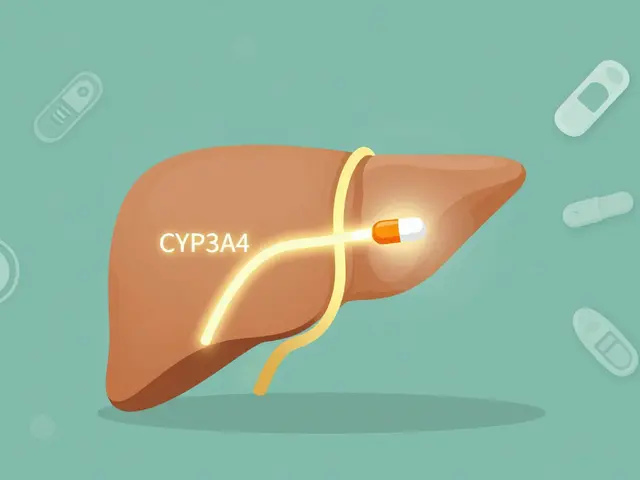
When you swallow a CCB, it doesn't all make it to your bloodstream. Your liver takes a first pass at the drug, a process called first-pass metabolism. For some drugs like felodipine, only 15% actually reaches systemic circulation. The heavy lifting is done by CYP3A4, a critical enzyme in the cytochrome P450 family responsible for metabolizing about 50% of all prescribed medications.
Once in the blood, these drugs are "sticky." They bind to proteins at rates between 90% and 99%. For example, amlodipine binds to plasma proteins at 97.5%, meaning only a tiny fraction of the drug is "free" to work at any given moment. This high protein binding, combined with varying volumes of distribution-amlodipine penetrates tissues deeply (21 L/kg) while nifedipine stays more localized (0.5 L/kg)-determines how long the drug stays in your system. While most of the drug is cleared by the liver, the resulting metabolites are eventually flushed out by the kidneys, with 80-90% of the cleared drug exiting via renal excretion.
The Split: Dihydropyridines vs. Non-Dihydropyridines
Not all CCBs are created equal. They fall into two main camps that behave very differently in your metabolic machinery.
Dihydropyridines (DHPs) are the "vascular specialists." Drugs like amlodipine and nifedipine mostly target the blood vessels to lower pressure. Because they aren't as aggressive in inhibiting liver enzymes, they're often the first choice for patients on a complex medication cocktail. Amlodipine is the gold standard here, with a long half-life of 30-50 hours, allowing for simple once-daily dosing.
Non-Dihydropyridines (Non-DHPs), such as verapamil and diltiazem, are the "heart specialists." They slow down the heart rate and affect cardiac conduction. The catch? They act as both a substrate (something the enzyme breaks down) and an inhibitor (something that blocks the enzyme). This double-agent behavior makes them much riskier. Verapamil, for instance, has a shorter half-life (4-12 hours) and can interfere with other drugs by blocking P-glycoprotein, a transporter protein that pumps foreign substances out of cells , which can cause drugs like digoxin to build up to toxic levels.
| Feature | Amlodipine (DHP) | Verapamil (Non-DHP) | Diltiazem (Non-DHP) |
|---|---|---|---|
| Half-Life | 30-50 Hours | 4-12 Hours | Moderate |
| CYP3A4 Role | Substrate Only | Substrate & Inhibitor | Substrate & Inhibitor |
| Interaction Risk | Low/Moderate | High | Moderate/High |
| Dosing Frequency | Once Daily | Twice Daily | Varies |
When Things Go Wrong: Common Drug-Drug Interactions
The real danger arises when you add a second drug that "fights" for the same enzyme. If you take a strong CYP3A4 inhibitor-like the antifungal ketoconazole or the antibiotic clarithromycin-the liver can't break down the CCB. This leads to a backup in the system.
Think of it like a traffic jam. If the enzyme (the exit ramp) is blocked, the CCB (the cars) just keep piling up in the blood. For verapamil users, this can decrease clearance by up to 70%. The result? A sudden drop in blood pressure (hypotension) or an abnormally slow heart rate (bradycardia). In extreme cases, the European Society of Cardiology has documented patients experiencing complete heart block, requiring an emergency pacemaker, after combining verapamil with potent inhibitors.
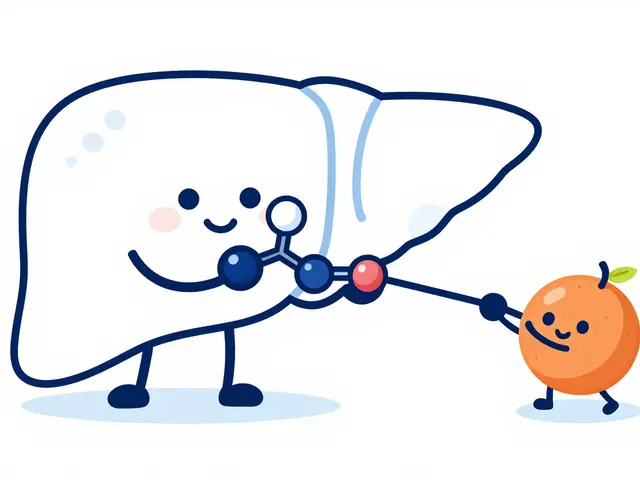
It's not just pharmaceutical drugs. Grapefruit juice is a notorious natural CYP3A4 inhibitor. Real-world data from patient forums show that nearly 70% of users reporting unexpected hypotension were consuming grapefruit juice alongside their CCBs. Similarly, medications for erectile dysfunction can interact with verapamil, often leading to a dangerous plummet in systolic blood pressure.
Managing the Risk in High-Risk Patients
If you're over 65 or have kidney issues, your metabolic capacity is naturally lower. Patients with an eGFR below 60 mL/min see a 47% increase in interaction severity. To keep things safe, clinicians use a few specific strategies:
- The "Low and Slow" Approach: Instead of the standard 5 mg dose of amlodipine, high-risk patients often start at 2.5 mg to see how their body handles the drug.
- Switching Agents: If a patient needs a strong antifungal, a doctor might switch them from diltiazem to amlodipine, as the latter has a much more favorable interaction profile.
- Trough Level Monitoring: For those on verapamil, tracking the lowest concentration of the drug in the blood (trough levels) between 50-150 ng/mL helps avoid toxicity.
- Timed Checks: Monitoring blood pressure within two hours of the first dose of a new interacting drug is a critical safety net.
The Future of CCB Clearance: Genetics and Microbiomes
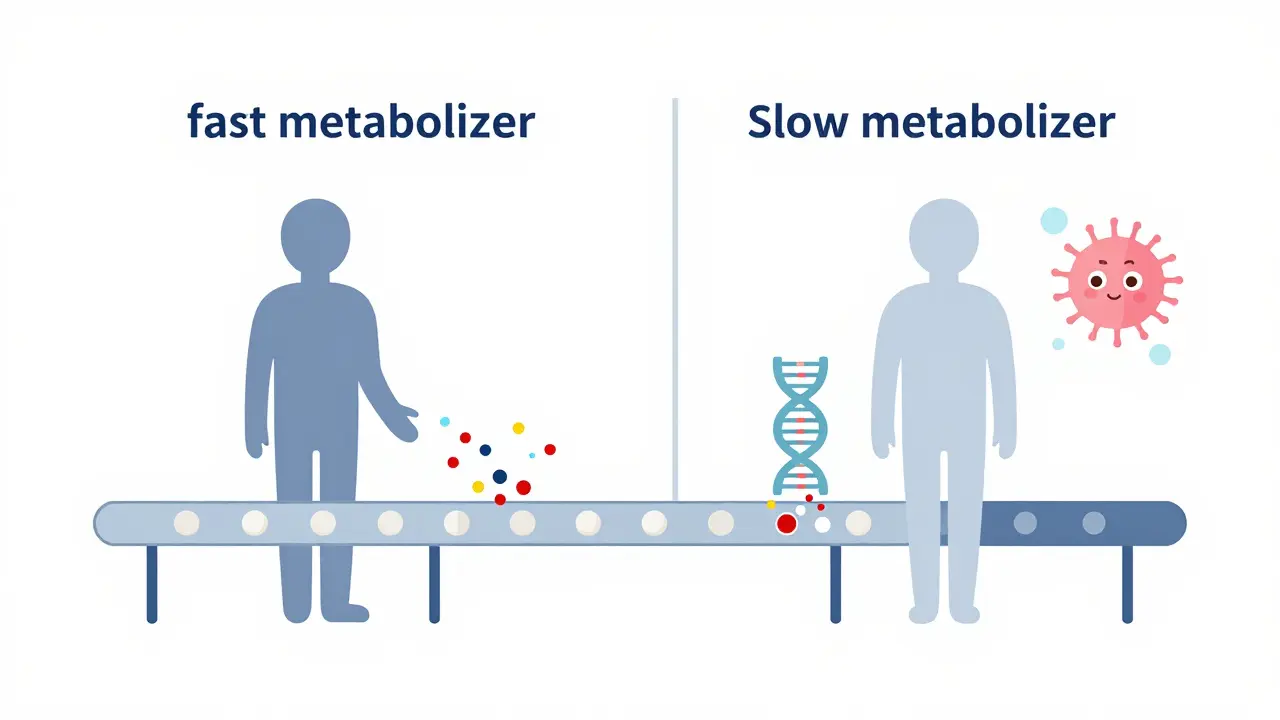
We are moving away from a one-size-fits-all dose. New research into Pharmacogenomics, the study of how genes affect a person's response to drugs suggests that about 27% of people have genetic variants of CYP3A4 that make them "slow metabolizers." For these people, a standard dose is effectively an overdose.
Even more surprising is the role of the gut. Recent studies in 2023 show that your gut microbiome-the trillions of bacteria in your digestive tract-can account for 34% of the variability in how quickly you clear CCBs. This means two people with the same genetics and the same liver function could still react differently based on their gut health.
Why is amlodipine usually preferred over verapamil for people taking multiple meds?
Amlodipine is primarily a substrate for the CYP3A4 enzyme, meaning it gets broken down by the liver without significantly blocking the enzyme itself. Verapamil, however, is both a substrate and an inhibitor. This means verapamil not only risks building up in your system but can also prevent other drugs from being cleared, increasing the risk of a dangerous interaction.
Can kidney disease affect how Calcium Channel Blockers work?
While CCBs are mostly processed by the liver, their metabolites are excreted by the kidneys. Patients with renal impairment (eGFR < 60 mL/min) are more susceptible to severe interactions. For example, while amlodipine usually doesn't require a dose change for kidney issues, verapamil often requires a 50% dose reduction to avoid toxicity.
What happens if I take a CCB and a strong CYP3A4 inhibitor together?
The inhibitor blocks the enzyme needed to clear the CCB from your blood. This can cause the concentration of the CCB to spike by 300% to 600%. This often manifests as severe hypotension (dangerously low blood pressure), dizziness, or bradycardia (slow heart rate), which can lead to fainting or heart block.
Is the "grapefruit effect" true for all CCBs?
Yes, generally. Grapefruit contains compounds that inhibit CYP3A4 in the intestines. Since almost all CCBs rely on this enzyme for their initial metabolism, grapefruit juice can increase the amount of drug that enters your bloodstream, leading to unexpected side effects like ankle swelling or extreme fatigue.
How long does it take for a CCB to leave the system?
It depends on the specific drug. Immediate-release nifedipine has a short half-life of 2-5 hours. Amlodipine, on the other hand, is very long-acting with a half-life of 30-50 hours, meaning it takes much longer for the drug to be fully cleared from the body.