Why Some People React Differently
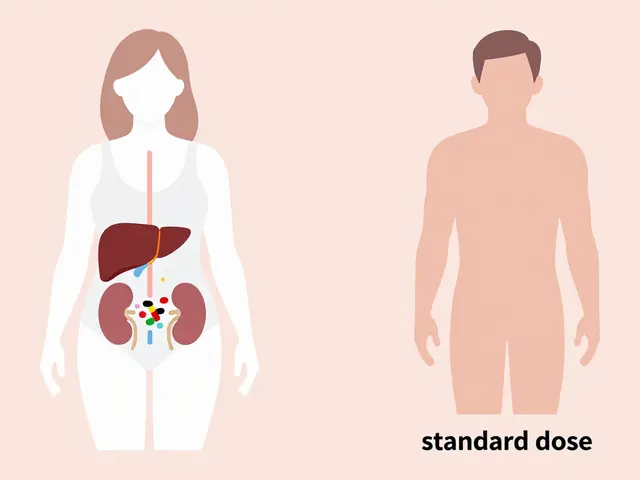
Why does a drug work perfectly for millions but cause a crisis in one person? The answer usually lies in the intersection of genetics and immunology. Most idiosyncratic drug reactions happen because of a "perfect storm" in the body. One leading theory is the hapten hypothesis. This happens when a drug's metabolites bind to proteins in your body, creating a "neoantigen." Essentially, the drug tricks your immune system into thinking a normal part of your body is a foreign invader, triggering a massive inflammatory attack. Another framework is the "danger hypothesis," where cellular stress signals amplify this immune response, making a mild reaction turn into a systemic emergency. These reactions are often delayed. You might feel fine for the first few days, but a crisis can emerge 1 to 8 weeks after you start the medication. This latency period makes it incredibly difficult for doctors to connect the dots immediately, often leading to diagnostic delays that can average over 17 days in severe cases.The Most Common Types of Unpredictable Reactions
Not all idiosyncratic reactions look the same. They generally target specific organ systems, with the liver and skin being the most frequent victims. Idiosyncratic Drug-Induced Liver Injury (IDILI) is perhaps the most notorious. It accounts for nearly half of all severe drug-induced liver cases. Some patients experience hepatocellular injury, where the liver cells themselves are damaged, while others face cholestatic injury, where the bile flow is blocked. This is why the liver is the primary reason for "black box" warnings on many medications. Then there are the skin reactions, known as Severe Cutaneous Adverse Reactions (SCARs). These include:- Stevens-Johnson Syndrome (SJS): A serious disorder where the skin blisters and peels.
- Toxic Epidermal Necrolysis (TEN): A more severe version of SJS that can be fatal in 25-35% of cases.
- DRESS Syndrome: A reaction involving eosinophilia (high white blood cell count) and systemic symptoms like fever and organ inflammation.
| Feature | Type A (Predictable) | Type B (Idiosyncratic) |
|---|---|---|
| Dose Dependency | Dose-dependent (More drug = more effect) | Dose-independent (Occurs at therapeutic levels) |
| Predictability | High (Based on pharmacology) | Low (Unpredictable/Rare) |
| Incidence | Common (80-85% of all reactions) | Rare (13-15% of all reactions) |
| Hospitalization Rate | Lower (20-30%) | Higher (70-80%) |
The Struggle with Detection and Diagnosis
Detecting these reactions is a nightmare for clinicians because there are very few reliable biomarkers. For the vast majority of drugs, there is no test you can take before starting the med to see if you'll react. There are a few rare exceptions. For example, testing for the HLA-B*57:01 allele can predict with nearly 100% accuracy if someone will have a hypersensitivity reaction to the HIV drug abacavir. Similarly, HLA-B*15:02 is used in some Southeast Asian populations to screen for risks of SJS/TEN when using carbamazepine. Outside of these specific genetic markers, doctors rely on "causality assessment" tools. For liver issues, they use the Roussel Uclaf Causality Assessment Method (RUCAM) scale. If a patient scores higher than 8, the reaction is considered "highly probable." For skin reactions, the ALDEN algorithm is the gold standard. Despite these tools, misdiagnosis is common-about 35% of liver-induced reactions are initially mistaken for the progression of an existing disease.The High Cost of the Unpredictable
These reactions aren't just a medical problem; they are a financial catastrophe for the pharmaceutical industry. The Tufts Center for the Study of Drug Development estimates that IDRs cost the industry about $12.4 billion annually. When a drug passes all clinical trials but causes severe liver failure in 1 out of 10,000 people after it hits the market, the company often has to pull the product entirely. Historically, drugs like troglitazone were withdrawn after it became clear that their idiosyncratic toxicity was too high. This is why the FDA and EMA have become so aggressive with post-marketing surveillance. They use massive databases, like the Sentinel Initiative, to scan millions of patient records for "signals" that a new, unpredictable reaction is emerging.
How to Manage and Navigate a Reaction
If you suspect you are having an unpredictable reaction, the first and most critical step is a "dechallenge." This is the medical term for stopping the drug to see if symptoms resolve. In very rare and low-risk cases, a "rechallenge" (reintroducing the drug) might be done to confirm the cause, but this is often avoided because it can trigger an even more severe secondary response. For those navigating a diagnosis, the journey is often fraught with frustration. Patient surveys show that over 70% of people feel their diagnosis was delayed and many feel dismissed by providers who aren't familiar with rare Type B reactions. The key to recovery is multidisciplinary care-combining the expertise of an allergist, a hepatologist, and a dermatologist to manage the systemic fallout.The Future: Can We Predict the Unpredictable?
We are moving toward a world where "idiosyncratic" doesn't mean "random." The convergence of AI and pharmacogenomics is starting to close the gap. The FDA's recent approval of a prediction test for pazopanib hepatotoxicity is a huge milestone. Researchers are now using multi-omics-studying a person's entire genetic and protein makeup-to find patterns. The European Commission's "ADRomics" project is aiming to create a predictive model by 2027. While experts like Dr. Jack Uetrecht warn that we may never completely eliminate these reactions due to the complexity of the human immune system, the goal is to reduce the incidence by 60-70% over the next decade through better risk stratification.What is the difference between a normal side effect and an idiosyncratic reaction?
A normal side effect (Type A) is a predictable extension of the drug's purpose-for example, a sedative making you sleepy. It usually depends on the dose. An idiosyncratic reaction (Type B) is unpredictable, doesn't depend on the dose, and is caused by your unique genetic or immune makeup.
How long does it take for these reactions to appear?
Unlike common side effects that happen immediately, idiosyncratic reactions often have a latency period. They typically manifest between 1 and 8 weeks after you start taking the medication.
Are there any tests to see if I'm at risk before taking a drug?
For most drugs, no. However, for a few specific medications, genetic tests exist. For example, testing for the HLA-B*57:01 allele can predict reactions to abacavir, and HLA-B*15:02 can predict SJS/TEN risks for carbamazepine in certain populations.
Which organs are most commonly affected by idiosyncratic reactions?
The liver and the skin are the primary targets. Idiosyncratic drug-induced liver injury (IDILI) is very common, as are severe cutaneous adverse reactions (SCARs) like Stevens-Johnson Syndrome and DRESS syndrome.
Why do these reactions cause drugs to be withdrawn from the market?
Because they are unpredictable and cannot be caught in standard clinical trials (which aren't large enough to see a 1-in-10,000 event), these reactions only appear after millions of people use the drug. If the reaction is severe or fatal, regulatory agencies like the FDA may pull the drug to protect public safety.