
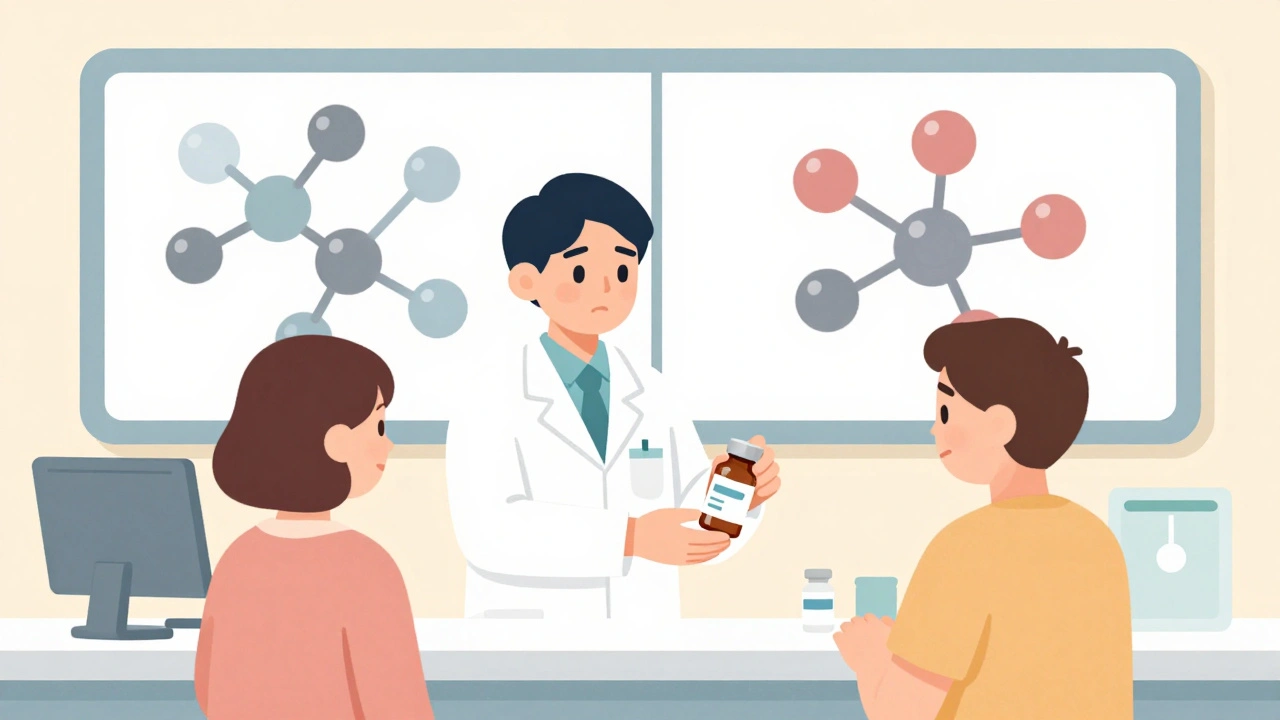
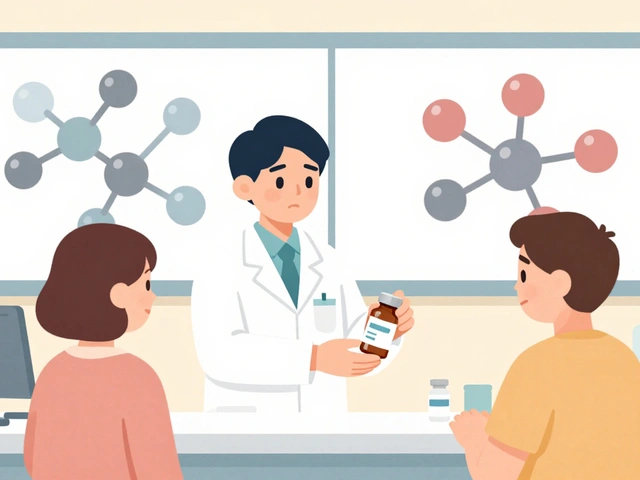
When a patient walks up to the pharmacy counter with a prescription for biologics, the pharmacist doesn’t just hand over a pill. They’re holding the key to lowering drug costs, improving patient outcomes, and navigating one of the most complex areas of modern medicine: biosimilars.
Biosimilars aren’t generics. That’s the first thing every pharmacist needs to make clear - to patients, to doctors, and even to themselves. Generics are exact chemical copies of small-molecule drugs. Biosimilars are highly similar versions of large, complex proteins made from living cells. Think of it like comparing a handcrafted wooden chair to a nearly identical replica made by a different carpenter using the same blueprint but slightly different tools. The result looks the same, works the same, and is just as safe - but the process to get there is far more complicated.
Why Pharmacists Are the Missing Link in Biosimilar Adoption
Biologics make up just 2% of all prescriptions in the U.S., yet they account for nearly half of all prescription drug spending. That’s a massive financial burden on patients and the system. Biosimilars can cut those costs by 15% to 35%, sometimes more. But adoption has been slow. Why? Because doctors are hesitant. Patients are confused. And many pharmacies haven’t been given the tools or authority to act.
That’s where pharmacists come in. Research from the US Oncology Network showed that when pharmacists took the lead in switching patients from reference biologics to biosimilars - instead of waiting for doctors to initiate the change - adoption jumped dramatically. In one case, pegfilgrastim (Neulasta) biosimilar use went from nearly zero to over 90% in under a year. The shift didn’t come from new guidelines or marketing. It came from pharmacists doing their job: making the substitution, documenting it, and talking to patients.
Interchangeable vs. Non-Interchangeable: What Pharmacists Need to Know
Not all biosimilars are created equal. The FDA has a special designation: interchangeable biosimilar. This means the product has met extra requirements proving it can be switched back and forth with the original biologic without increasing safety risks. As of late 2023, only a handful of biosimilars have this status - including those for insulin, etanercept, and adalimumab.
Interchangeable biosimilars can be swapped at the pharmacy without contacting the prescriber. That’s huge. It means pharmacists can act autonomously, just like they do with generics. But here’s the catch: only a few products have that status. Most biosimilars still require prescriber approval before substitution. That’s where state laws come in.
As of October 2023, 48 states have laws covering biosimilar substitution. But the rules vary wildly. Some states require the prescriber to opt out in writing. Others demand that the pharmacist notify the prescriber within 24 hours. A few still don’t allow substitution at all. Pharmacists must know their state’s law inside and out. One wrong move could mean legal trouble - or worse, a patient getting the wrong medication.
Counseling Patients: Breaking Down Myths One Conversation at a Time
Patients hear “biosimilar” and think “cheap copy.” They worry it won’t work as well. Or worse - that switching will make them sicker.
The FDA says biosimilars have no clinically meaningful differences in safety, purity, or potency compared to the original. But patients don’t read FDA documents. They read Reddit threads. They hear stories. They see a different-looking vial and panic.
Successful counseling isn’t about reciting facts. It’s about listening first. Ask: “What are you worried about?” Then respond with clarity, not jargon. Say: “This isn’t a generic. It’s a biosimilar - made from living cells, just like the original. The FDA required 10 times more testing than for a regular generic. It’s been used safely in Europe for over 15 years. In studies, patients switching to this version had the same results as those who stayed on the brand.”
One pharmacist in Houston shared that after explaining the science simply, 8 out of 10 patients agreed to the switch. The other two? They asked for time to think. That’s okay. Respect their pace. Offer to call the doctor together. Provide printed materials. Follow up in a week.
And never underestimate the power of appearance. When the new biosimilar looks different - different color, size, or shape - patients are 21% more likely to stop taking it. That’s why documentation matters. Make sure the patient knows: “This is the same medicine, just packaged differently.”
Documentation and Traceability: The Unseen Responsibility
When you substitute a biosimilar, you’re not just filling a prescription. You’re creating a legal and medical record. Every time you swap a reference biologic for a biosimilar, you must record the exact product name, manufacturer, and batch number. This isn’t optional. It’s required for pharmacovigilance - tracking side effects, adverse reactions, and long-term safety.
Why does this matter? Because if a patient has a reaction, doctors and regulators need to know exactly which version they received. A batch number can mean the difference between identifying a manufacturing flaw and ruling out a coincidence. The International Federation of Pharmaceutical Manufacturers & Associations (IFPMA) says traceability is non-negotiable. Pharmacies that don’t track this are putting patients at risk - and exposing themselves to liability.
Electronic health records (EHRs) now have fields for biosimilar substitution. Make sure your pharmacy’s system is set up to capture: the original product, the substituted product, the batch number, the date, and the reason for substitution. If your system doesn’t support it, push for an upgrade. This isn’t paperwork. It’s patient safety.
Overcoming Prescriber Resistance
Not every doctor is ready to let pharmacists take the lead. Some still believe biosimilars are “second-rate.” Others fear lawsuits. A few have had bad experiences - maybe a patient had a reaction after a switch, even if it was unrelated.
One pharmacist on Student Doctor Network reported a doctor who got so angry about a substitution that they now insist on “dispense as written” for all biologics. That’s a common reaction - but it’s fixable.
Start by educating, not arguing. Share FDA data. Show them the ASCO study showing improved adoption rates with pharmacist-led substitution. Offer to co-host a lunch-and-learn at the clinic. Bring printed summaries of interchangeability guidelines. Ask: “What would make you comfortable letting us substitute?”
At US Oncology, they solved this by having every provider sign an acknowledgment form after completing mandatory biosimilar training. Once doctors understood the process - and knew substitutions were documented and safe - interruptions dropped. No more phone calls. No more delays. Just better care.
Why Pharmacists Are Leading the Charge
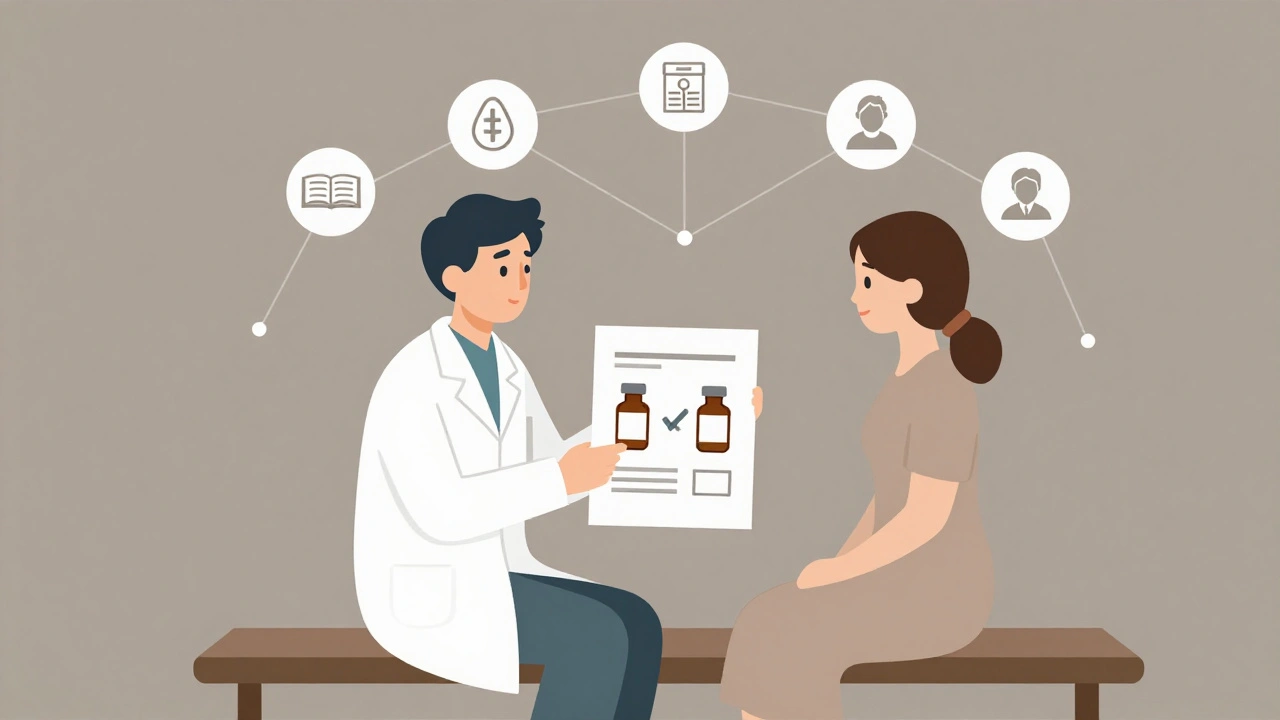
Studies show pharmacists are far more likely than physicians to recommend biosimilars. In one survey, 87% of pharmacists said they’d recommend a biosimilar, compared to just 62% of doctors. Why? Because pharmacists live in the medication world. We see the cost. We hear the patient complaints. We know how often people skip doses because they can’t afford the brand.
And pharmacists are learning faster. Nearly 80% have taken continuing education on biosimilars. Only 43% of physicians have. That gap isn’t accidental. It’s because pharmacy schools, state associations, and professional groups have stepped up. They’ve created courses, webinars, and certification tracks.
That’s why the future of biosimilars isn’t in the doctor’s office. It’s in the pharmacy.
What’s Next for Pharmacists?
The FDA is considering eliminating the separate “interchangeable” designation altogether - meaning any biosimilar could be substituted automatically. If that happens, pharmacists will become the gatekeepers of biologic therapy.
That’s a big responsibility. But it’s also an opportunity. Pharmacists who master biosimilars won’t just be dispensers. They’ll be clinical advisors, cost-savers, and patient advocates. They’ll be the ones who make sure patients don’t stop their meds because they’re scared or confused.
And as the market grows - with more biosimilars for cancer, autoimmune diseases, and diabetes - the need for pharmacy specialists in biotherapeutics will only increase. The science is here. The data is clear. The patients are waiting.
Now it’s up to pharmacists to lead.
Louis Llaine
December 8, 2025 AT 10:41So let me get this straight - we’re giving pharmacists the keys to the kingdom because they’re ‘closer to the patient’? Meanwhile, my doctor still thinks ‘biosimilar’ is a type of yoga pose. I’ll believe it when I see a pharmacist who can tell me why my insulin isn’t making my legs stop tingling - and why the vial looks like it was designed by a toddler with a Sharpie.
Helen Maples
December 9, 2025 AT 01:03The structural complexity of biosimilars demands rigorous analytical characterization, including protein folding, glycosylation profiles, and aggregation kinetics - all of which are validated through comparative clinical trials. The FDA’s biosimilar pathway requires demonstration of no clinically meaningful differences in safety, purity, and potency. Pharmacists are uniquely positioned to ensure adherence through patient education and traceability protocols. This is not a cost-cutting measure - it is evidence-based clinical stewardship.
David Brooks
December 9, 2025 AT 23:17THIS. THIS IS THE FUTURE. 🚀 Imagine a world where your pharmacist doesn’t just hand you a pill - they sit down with you, explain why this new vial isn’t a ‘cheap knockoff,’ and actually CARES if you’re scared. I switched to a biosimilar for my rheumatoid arthritis last year and my out-of-pocket dropped from $800 to $120. I cried. My doctor cried. My cat cried (probably because I was hugging him too hard). Pharmacists are the unsung heroes of modern medicine. Let them do their job.
Jennifer Anderson
December 10, 2025 AT 16:34omg i just read this and i’m so proud of my pharmacist 😭 she’s the one who explained to me that my biosimilar isn’t ‘fake’ - she even printed out pics of the protein structures and drew little arrows. i was scared i’d get sicker but she just listened and didn’t rush me. also she gave me a sticker. it says ‘biosimilar warrior.’ i taped it to my pillbox. i feel seen.
Sadie Nastor
December 11, 2025 AT 10:52thank you for writing this. 🙏 i’ve been on biologics for 8 years and every time i get a new vial i panic. but last month my pharmacist sat with me for 20 minutes, showed me the FDA’s comparison charts, and even called my doctor to confirm everything. i cried. not from fear - from relief. we need more people like her. and yes, the packaging changed. but the difference? it’s my life. not my wallet. my life.
Nicholas Heer
December 13, 2025 AT 01:02YEAH RIGHT. ‘Biosimilars’ - that’s just Big Pharma’s way of slipping in untested crap under the radar. You think the FDA’s really checking glycosylation patterns? Nah. They’re getting paid by the same companies that make the originals. And now they want pharmacists to swap meds without a doctor’s say-so? Next thing you know, your thyroid med’s gonna be swapped for a ‘similar’ version made in a basement in China. Wake up, sheeple. This is how they control the masses.
Kurt Russell
December 13, 2025 AT 11:10LET ME TELL YOU SOMETHING - pharmacists are the REAL frontline warriors. They’re the ones holding the line between a patient getting better and going broke. I’ve seen it firsthand. A single mom skips her biologic because it costs $5,000 a month. Then the pharmacist says, ‘Here’s the biosimilar - same results, $1,200.’ She starts crying. Then she hugs them. That’s not a job. That’s a revolution. And if you’re still sitting on the fence? You’re not just behind the times - you’re holding back healing.
Stacy here
December 14, 2025 AT 12:22It’s not about substitution - it’s about sovereignty. Who owns your body? The doctor? The FDA? The insurance company? Or the pharmacist who actually talks to you? This isn’t just about drugs - it’s about power. The system wants you dependent. But pharmacists? They’re quietly flipping the script. They’re not just dispensing - they’re redefining care. And if you think this is just ‘cost-cutting,’ you’re missing the entire spiritual shift happening in healthcare. We’re moving from hierarchy to humility. And it’s beautiful.
Kyle Flores
December 14, 2025 AT 22:39i used to be scared of biosimilars too. i thought they were like knockoff sneakers. but my pharmacist didn’t just hand me the bottle - she asked me what scared me. i said, ‘what if it doesn’t work?’ she said, ‘let’s try it together.’ we tracked my symptoms for 3 months. i’m still here. still walking. still alive. no drama. no hype. just someone who cared enough to sit down. that’s what matters.
Ryan Sullivan
December 15, 2025 AT 16:00While the pharmacological rationale for biosimilar substitution is empirically sound, the implementation of state-level substitution laws remains a regulatory patchwork of staggering incoherence. The absence of a unified federal framework creates liability exposure, documentation inconsistency, and clinical ambiguity. Until the FDA and CMS harmonize substitution protocols - and mandate EHR integration with traceable batch-level data - pharmacists are operating in a legal minefield disguised as innovation.
Olivia Hand
December 15, 2025 AT 20:54Interesting that 87% of pharmacists recommend biosimilars but only 62% of doctors do. Why? Are doctors just out of touch? Or is it that they’ve never had to explain to a patient why they can’t afford their drug? I’ve seen patients cry in the parking lot after getting their bill. Maybe pharmacists aren’t just better at this - they’re just closer to the pain.
Jane Quitain
December 15, 2025 AT 23:03i just switched to a biosimilar and i’m so nervous 😭 my pharmacist was so nice though - she gave me a little pamphlet with a drawing of a protein and said ‘it’s like the same song, just sung by a different voice.’ i still don’t totally get it but i trust her. also i’m saving like $600 a month. that’s my rent. so… yeah. thank you, pharmacy.
Nancy Carlsen
December 16, 2025 AT 02:47❤️❤️❤️ i’m from a small town in Alabama and our pharmacist is basically a miracle worker. she teaches patients how to read their bills, calls reps to get coupons, and even starts a little ‘biosimilar book club’ where people share stories. last week, a veteran told her he hadn’t filled his med in 6 months because he was ashamed. she cried with him. then she handed him his biosimilar and said, ‘you’re not broken. the price is.’ i’m not religious - but that’s holy.
Ted Rosenwasser
December 16, 2025 AT 03:18Let’s be clear: biosimilars are a corporate strategy disguised as patient care. The real goal? To break the patent monopolies of biologics so Big Pharma can repackage and reprice under a new label. The science? Overhyped. The safety? Still being studied in long-term cohorts. And the pharmacist’s role? A convenient proxy to shift liability away from prescribers and onto the front-line staff who can’t legally refuse. This isn’t progress - it’s economic engineering dressed in white coats.
Ashley Farmer
December 16, 2025 AT 22:22my grandma’s on a biosimilar now. she didn’t understand any of the science. but she understood that she could finally afford her meds. my pharmacist didn’t lecture her - she just said, ‘this is the same medicine, just cheaper.’ grandma nodded, took it, and asked if they had cookies in the back. they did. she’s been stable for 10 months. no side effects. no drama. just a quiet, kind person doing what she’s supposed to do. sometimes, that’s all you need.